Description
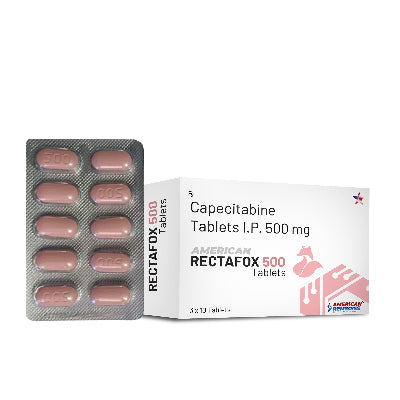
Capegard 500 mg (Capecitabine) – Oral Fluoropyrimidine Prodrug for Solid Tumors
Capegard 500 mg contains capecitabine, an oral prodrug converted to **5‑fluorouracil (5‑FU)** in tumor tissue via thymidine phosphorylase. It enables targeted chemotherapy delivery with fewer hospital visits (versus intravenous 5‑FU).
🎯 Indications & Standard Dosing
- Colorectal cancer: Adjuvant therapy or unresectable/metastatic disease—1,250 mg/m² twice daily for 14 days followed by 7‑day rest (up to 8 cycles or until toxicity/progression).
- Breast cancer: As monotherapy following anthracycline/taxane failure—or in combination with docetaxel; same 1250 mg/m² twice‑daily cycling.
- Gastric / gastro‑oesophageal junction cancer: Dose varies—850, 1,000 or 625 mg/m² twice daily, based on combination regimen, for a 21‑day schedule.
- Capegard 500 mg tablets are typically used to match total daily capecitabine doses per m² (e.g. 2 tablets BID for ~1.6 m² body surface area). Tailor dosing per oncologist approval.
⚠️ Common Adverse Effects & Safety Considerations
- Hand‑foot syndrome (palmar‑plantar erythrodysesthesia)—affects 43–71% of users. Presents with redness, pain, peeling on palms/soles; dose interruption or reduction recommended.
- Other frequent effects (>10%) include diarrhea, nausea, vomiting, mucositis, loss of appetite, fatigue, rash, edema, stomatitis, and myelosuppression.
- Life-threatening complications: cardiotoxicity (e.g. angina, arrhythmias), severe neutropenia, intestinal perforation—especially in DPD-deficient patients.
🩺 Monitoring Requirements & Precautions
- Obtain baseline CBC, liver/renal panels, serum electrolytes, and periodically monitor throughout treatment.
- DPD (dihydropyrimidine dehydrogenase) genetic testing is recommended where available—to identify patients at high risk for severe toxicity.
- Contraindications: DPD deficiency, pregnancy, breastfeeding, severe renal or hepatic impairment, and hypersensitivity to fluoropyrimidines.
- Avoid concurrent warfarin or sorivudine (brivudine) use due to bleeding and fatal toxicity. Monitor INR closely when necessary.
- Counsel patients on hydration, sun protection, and early recognition of HFS symptoms.
✅ Advantages of Capegard 500 mg
- Fixed 500 mg strength tablets facilitate BSA-based dosing and dose escalation flexibility.
- Oral route enhances outpatient compliance and limits infusion center visits.
- Generic equivalent to Xeloda, often more affordable—with equivalent efficacy.
❓ Frequently Asked Questions (FAQs)
1. Can I take Capegard 500 mg with food?
Yes—should be taken within 30 minutes after a **meal** (breakfast and dinner) to enhance absorption and reduce gastrointestinal upset. Take with plenty of water.
2. What should I do if I miss a dose?
If vomiting occurs within 15 minutes of ingestion, repeat once only. Otherwise, skip the missed dose and resume the schedule. Never double dose.
3. How is therapy duration determined?
Treatment lasts until **disease progression** or **unacceptable toxicity**. In adjuvant cases, up to 6 months (8 cycles). In metastatic disease, continuing therapy might be appropriate if well tolerated.
4. How is hand‑foot syndrome managed?
Grade 1–2 reactions may improve with moisturizers and avoiding heat/pressure. For grade ≥2, consider dose interruption or reduction; use pyridoxine per clinical judgment.
5. Is Capegard safe for elderly patients?
Yes—but elderly patients may be more sensitive—dose modifications and close monitoring essential, especially for renal function and hand‑foot syndrome risk.