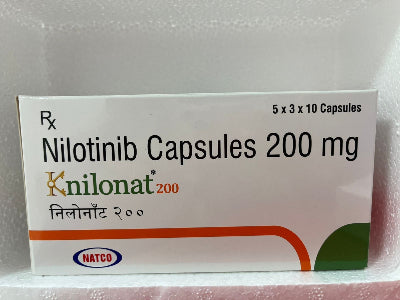
Description
Knilonat 200 mg (Nilotinib) – Oral TKI for Philadelphia‑Positive CML
Knilonat 200 mg contains nilotinib, a potent BCR-ABL tyrosine kinase inhibitor manufactured by Natco Pharma in India. It is indicated for adults and children (≥1 year) with Philadelphia chromosome-positive chronic myeloid leukemia (Ph+ CML), particularly for those resistant or intolerant to imatinib.
⚙️ Mechanism of Action
Nilotinib selectively and competitively blocks the BCR-ABL tyrosine kinase, inhibiting leukemic cell proliferation. It is 10–30 times more potent than imatinib with improved efficacy in resistant CML cases.
🩺 Dosage & Administration
- The typical dose is **200 mg twice daily**, taken on an empty stomach with water; avoid food for ≥2 hours before and 1 hour after dosing.
- Swallow capsules whole—do not crush, chew, or split them.
- If a dose is missed, skip it; do not double the next dose. Continue as scheduled.
⚠️ Side Effects & Safety Precautions
- **Common adverse effects**: headache, nausea, diarrhea, fatigue, muscle aches, rash, hair thinning.
- **Serious risks**: QT prolongation, sudden death in rare cases, hepatotoxicity, pancreatitis, and cytopenias. Monitor lipase, electrolytes, liver function, ECG regularly.
- Contraindicated in pregnancy and breastfeeding. Use effective contraception.
- Use caution in liver or kidney impairment; dose adjustments may be necessary.
✅ Why Choose Knilonat 200 mg?
- Cost-effective generic alternative to Tasigna delivering equivalent efficacy.
- Convenient twice-daily oral capsule allows outpatient treatment without infusion.
- Essential medicine recognized for its role in CML management.
❓ Frequently Asked Questions (FAQs)
Q1. When should I take Knilonat relative to meals?
You must take it on an empty stomach—avoid food at least 2 hours before and 1 hour after the dose for optimal absorption.
Q2. Can I drive while on Knilonat?
Driving may be unsafe if you experience dizziness or fatigue—evaluate your tolerance before operating machinery.
Q3. What monitoring tests are required?
Regular CBC, liver function, pancreatic enzymes, QTc via ECG, and serum electrolytes are essential during therapy.
Q4. What should I avoid while using this medication?
Avoid grapefruit juice and other CYP3A inhibitors (e.g. ketoconazole), which may increase drug levels and toxicity.
Q5. What if I experience irregular heartbeat?
Stop treatment immediately and contact your physician—QT prolongation is a serious but rare side effect.