
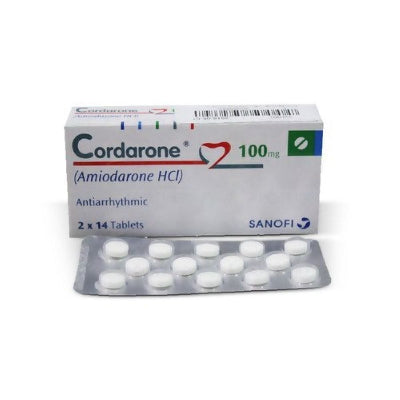

Cordarone 100 mg (Amiodarone)
Cordarone 100 mg contains amiodarone, a potent class III antiarrhythmic with multi-channel effects (also exhibits Class I/II/IV properties) used to manage life-threatening ventricular arrhythmias and for rhythm control in selected atrial fibrillation/flutter patients where other therapies are unsuitable. Amiodarone has a complex efficacy and toxicity profile, and requires specialist cardiology oversight for initiation and long-term monitoring.
Because amiodarone accumulates in tissues and has a very long half-life, both therapeutic effects and adverse reactions may appear or persist weeks to months after dose changes; baseline assessments and ongoing surveillance are essential.
Product introduction
Cordarone (amiodarone) is available in oral tablet strengths (including 100 mg) and IV formulations for acute use. It is typically reserved for serious arrhythmias such as sustained ventricular tachycardia/fibrillation and for maintenance of sinus rhythm in refractory atrial fibrillation when alternative options are unsuitable. Treatment requires an individualized plan balancing rhythm control benefit against known organ toxicities.
Uses of Cordarone 100 mg (Amiodarone)
Common indications (specialist-directed):
- Ventricular tachycardia (sustained) and prevention of ventricular fibrillation recurrence
- Maintenance of sinus rhythm in recurrent atrial fibrillation/flutter when other therapies fail or are contraindicated
- Arrhythmias in critically ill patients under specialist care (IV formulations used acutely)
Note: Indications, dosing and duration must be decided by a cardiologist or electrophysiologist. Amiodarone is not a first-line agent for routine rate control in most patients.
Benefits of Cordarone 100 mg (Amiodarone)
Why amiodarone is used in selected patients:
- High antiarrhythmic potency: effective for both supraventricular and ventricular rhythm control where alternatives fail.
- Works in structural heart disease: retains efficacy in many patients with cardiomyopathy compared with some other agents.
- Available IV and oral: allows acute and chronic management pathways.
Side effects of Cordarone 100 mg (Amiodarone)
Amiodarone has a broad range of adverse effects that may affect the lungs, thyroid, liver, eyes, skin, nervous system and heart. Some effects can be severe or irreversible—monitoring is crucial.
Common and important side effects
- Pulmonary toxicity (interstitial pneumonitis, fibrosis) — can be life-threatening.
- Thyroid dysfunction — hypo- or hyperthyroidism (iodine content of drug).
- Hepatic enzyme elevations and rare severe hepatotoxicity.
- Cardiac conduction abnormalities — bradycardia, AV block; may worsen heart failure in susceptible patients.
- Corneal microdeposits, visual disturbances; optic neuropathy (rare but serious).
- Photosensitivity and blue-gray skin discoloration with chronic use.
Urgent signs: new/worsening breathlessness, persistent cough, fever, unexplained jaundice, visual loss, syncope, severe bradycardia or signs of major liver injury — seek immediate medical attention.
How to use Cordarone 100 mg (Amiodarone)
- Follow your cardiologist’s prescription exactly — dosing depends on indication (loading vs maintenance regimens). Typical oral maintenance doses range from 100–400 mg daily depending on patient response and tolerability; many patients are maintained on 100–200 mg daily.
- Oral loading regimens (used under specialist supervision) commonly begin with higher total daily doses (eg. 400–600 mg divided) for 1–4 weeks, then taper toward a maintenance dose — specific regimens vary by protocol.
- Take with food if GI intolerance occurs. Do not stop abruptly without clinician guidance due to risk of arrhythmia recurrence and long tissue half-life.
- IV amiodarone is used for acute life-threatening arrhythmias in hospital settings only and requires monitoring of blood pressure and ECG. Transitioning IV→oral should follow specialist protocols.
How Cordarone works
Amiodarone prolongs myocardial repolarization (class III effect) by blocking potassium channels and also exerts sodium channel blockade, non-competitive beta-blocking and calcium channel blocking effects. These multi-modal actions reduce abnormal automaticity and re-entrant arrhythmias. Tissue accumulation leads to prolonged action.
Safety advice
| Pregnancy / Breastfeeding | Avoid unless benefit clearly outweighs risk — amiodarone crosses the placenta and enters breast milk and is generally avoided in pregnancy and breastfeeding where alternatives are available. Discuss with your specialist. |
| Pulmonary monitoring | Baseline chest X-ray and pulmonary function tests are often recommended; monitor for new respiratory symptoms and obtain imaging promptly if suspected. |
| Thyroid monitoring | Perform baseline thyroid function tests (TSH, free T4) and monitor periodically during therapy due to risk of hypo- & hyperthyroidism. |
| Liver monitoring | Check baseline LFTs and monitor periodically; discontinue or adjust if significant hepatotoxicity occurs. |
| Ophthalmic | Baseline eye exam and periodic monitoring recommended for corneal deposits and optic neuropathy if symptoms occur. |
| Cardiac conduction | Monitor ECG and heart rate — avoid in patients with severe sinus node dysfunction or high-degree AV block unless pacemaker present. Caution in decompensated heart failure. |
| Drug interactions | Amiodarone inhibits multiple CYP enzymes and P-glycoprotein — notable interactions with warfarin, digoxin, many statins, certain antiarrhythmics and other agents. Dose adjustments and close monitoring are often required. |
What if you forget to take Cordarone?
- If you miss a dose, take it as soon as you remember on the same day unless close to the next scheduled dose — do not double doses without clinician approval.
- Because of amiodarone’s long half-life, occasional missed doses are less likely to cause abrupt loss of effect, but adherence is important for steady control; consult your cardiologist for specific advice.
All substitutes
Alternative antiarrhythmic strategies depend on arrhythmia type and patient factors and may include other class III drugs (eg. sotalol, dofetilide), catheter ablation, rate-control strategies, or device therapy (ICD) — selection is specialist-led. Amiodarone is often chosen when alternatives are unsuitable due to unique efficacy in structural heart disease. :
Quick tips
- Inform all treating clinicians and dentists that you are taking Cordarone before procedures or new prescriptions.
- Carry a treatment card listing amiodarone and recent monitoring results.
- Report new breathlessness, cough, vision changes, jaundice, excessive fatigue, syncope or significant bradycardia immediately.
- Avoid excessive sun exposure and use photoprotection to reduce skin photosensitivity and discoloration risk.
Fact Box
| Generic name | Amiodarone |
| Brand | Cordarone 100 mg |
| Drug class | Antiarrhythmic (Class III, multi-channel) |
| Form | Oral tablet (100 mg) |
| Typical maintenance dose | Commonly 100–200 mg once daily (individualized; range 100–400 mg/day). Higher loading doses are used initially under supervision. |
| Prescription | Required — cardiology/physician specialist |
Patient concerns
Will Cordarone cure my arrhythmia? Amiodarone controls or suppresses arrhythmias in many patients but is not a cure—definitive therapy (eg. ablation, device) may be recommended depending on arrhythmia type and patient goals. Discuss expected outcomes and alternatives with your cardiologist.
How quickly will effects appear? Intravenous use has rapid effects in acute settings; oral therapy often requires a loading period (days–weeks) while tissues accumulate drug before maximal chronic effect.
User feedback
Many patients report effective arrhythmia control but note side effects requiring monitoring or cessation in some cases (eg. pulmonary symptoms, thyroid dysfunction, skin changes). Long-term follow up with cardiology and relevant specialists is standard.
Are you currently taking Cordarone 100 mg? Let us know how it is working for you by taking this survey.
FAQs
Can I stop Cordarone if I feel better?
Do not stop without cardiology approval. Abrupt cessation may lead to arrhythmia recurrence; decisions to stop should consider arrhythmia control, adverse effects, and alternative therapies.
Is Cordarone safe if I have liver disease?
Severe hepatic impairment is a contraindication in many cases; baseline liver tests and periodic monitoring are required. Discuss liver disease with your specialist before starting.
What major drug interactions should I worry about?
Important interactions include warfarin (increases INR), digoxin (increases levels), many statins (risk of myopathy), certain antiarrhythmics and CYP inhibitors/inducers — always provide a full medication list to your cardiology pharmacist.
How should I store Cordarone?
Store at room temperature away from moisture and heat. Keep out of reach of children and do not use after the expiry date.
Related products
- Other antiarrhythmic agents (specialist-selected)
- Rate control medications (beta-blockers, calcium channel blockers)
- Cardiac devices and ablation services (as alternative strategies)
Want to share the information?
Share this article to help patients and caregivers understand amiodarone therapy and safe use.
Disclaimer:
This content is educational only and not a substitute for professional medical advice. Cordarone (amiodarone) must be prescribed and monitored by qualified clinicians. Do not self-medicate. For specific clinical guidance follow your cardiologist’s recommendations and local product labeling.
References
- StatPearls: Amiodarone — dosing and pharmacology.
- Drugs.com — Amiodarone dosage guidance.
- Biancatelli RMLC et al., Adverse reactions of Amiodarone (PMC).
- Mayo Clinic — Amiodarone side effects & monitoring.
- FDA Cordarone prescribing information / product label.
Marketer details
genericurerx — support@genericurerx.com — www.genericurerx.com
In case of any issues, contact us
For ordering or prescription verification use live chat or our contact page. For medical concerns contact your cardiology team immediately.
Lab tests offered by us
- Baseline & periodic LFTs
- Thyroid function tests (TSH, free T4)
- Chest imaging / pulmonary function tests if indicated
- ECG and heart rate monitoring
- Ophthalmology exam if symptoms occur
Additional offers
Prescription coordination, cardiology consultation referrals and monitoring support available on request. Use code GLOBAL10 where eligible for first-order discounts.



Reviews
There are no reviews yet.