
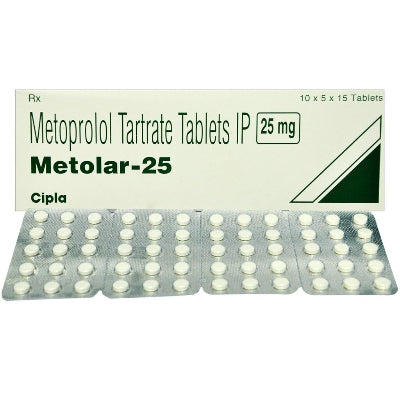
Metolar 25 mg (Metoprolol)
Metolar 25 mg contains metoprolol, a selective β1-adrenergic blocker (beta-blocker) widely used to treat high blood pressure, angina, certain cardiac arrhythmias, and to reduce cardiac workload after myocardial infarction. Metoprolol is available in immediate-release (tartrate) and extended-release (succinate) formulations; dosing and frequency differ by formulation and indication. The 25 mg tablet is a commonly used low-to-moderate strength suitable for initiation or maintenance therapy as directed by a clinician.
Metoprolol reduces heart rate, decreases myocardial oxygen demand and lowers blood pressure, helping prevent cardiac events and improve symptoms in appropriately selected patients.
Product introduction
Metoprolol selectively blocks β1 receptors in the heart, producing negative chronotropic (slower heart rate) and inotropic (reduced contractility) effects. Over time, these effects lower blood pressure, reduce ischaemic symptoms (angina), and decrease the likelihood of recurrent myocardial ischaemia. The succinate (ER) form is commonly used for once-daily heart-failure and post-MI therapy; the tartrate (IR) form is often dosed twice daily for blood-pressure control or acute rate control.
Uses of Metolar 25 mg (Metoprolol)
Common clinical indications include:
- Hypertension (high blood pressure)
- Chronic stable angina (symptom relief and secondary prevention)
- Rate control in atrial fibrillation or other supraventricular tachycardias
- Post-myocardial infarction secondary prevention (typically ER formulation as part of guideline therapy)
- Migraine prophylaxis (off-label/neurology-directed)
- Essential tremor and performance anxiety (specialist-directed dosing)
Note: Indication, formulation (tartrate vs succinate) and dosing schedule are determined by the prescriber based on your clinical situation.
Benefits of Metolar 25 mg
- Reduces heart rate and blood pressure: helps control hypertension and reduces cardiac workload.
- Improves angina symptoms: lowers frequency and severity of angina episodes.
- Proven post-MI benefit: reduces morbidity and mortality when used appropriately.
- Versatile: used for cardiac and non-cardiac conditions (migraine, tremor, anxiety) under supervision.
- Well-studied safety profile: familiar to clinicians worldwide.
Side effects of Metolar 25 mg (Metoprolol)
Many adverse effects are dose-dependent and manageable with dose adjustment. Report persistent or severe symptoms to your prescriber.
Common side effects
- Fatigue or tiredness
- Dizziness or lightheadedness (especially on standing)
- Bradycardia (slow heart rate)
- Cold extremities (hands/feet)
- Gastrointestinal upset (nausea)
- Sleep disturbance, vivid dreams
Serious but uncommon risks: worsening heart failure, symptomatic bradycardia, bronchospasm in reactive airways disease, severe hypotension, and signs of allergic reaction. Seek urgent care for fainting, severe breathlessness, chest pain or very slow pulse.
How to use Metolar 25 mg (Metoprolol)
- Take exactly as prescribed by your clinician. Do not alter dose without medical advice.
- If on immediate-release (tartrate): commonly given twice daily. If on extended-release (succinate): typically once daily — confirm which formulation you have.
- Take with food to reduce stomach upset and improve absorption/stability of blood levels.
- Do not stop abruptly — sudden discontinuation may provoke angina, arrhythmia or rebound hypertension; taper under clinician supervision.
- Monitor heart rate and blood pressure regularly, particularly after dose changes.
How Metolar works
Metoprolol selectively inhibits cardiac β1 receptors which reduces sympathetic stimulation of the heart. This leads to slower heart rate, reduced myocardial contractility and lower blood pressure. Over time, neurohormonal modulation contributes to improved cardiac remodelling and reduced events in specific settings (e.g., post-MI, heart failure with reduced ejection fraction when indicated).
Safety advice
| Asthma / COPD | Use with caution — although β1-selective, metoprolol can provoke bronchospasm in susceptible patients. Discuss respiratory history with your prescriber. |
| Diabetes | May mask signs of hypoglycaemia (tachycardia, tremor). Monitor glucose closely and inform your diabetes team of beta-blocker therapy. |
| Heart failure | Initiation and up-titration in heart failure should follow guideline algorithms with monitoring; may transiently worsen symptoms if started too rapidly. |
| Bradycardia / conduction disease | Avoid if baseline heart rate is very low or in high-grade heart block unless a pacemaker is present. |
| Pregnancy & breastfeeding | Use only if clearly needed — discuss risks. Infant monitoring for bradycardia/hypoglycaemia may be required if used in breastfeeding. |
| Drug interactions | Caution with other rate-slowing drugs (e.g., verapamil, diltiazem, digoxin, some antiarrhythmics). CYP2D6 inhibitors may increase metoprolol levels. Always disclose all medicines and supplements. |
What if you forget a dose?
- Take the missed dose as soon as you remember on the same day.
- If it is almost time for the next scheduled dose, skip the missed dose — do not double up.
- If you miss several doses, contact your clinician for instructions.
All substitutes
Other beta-blockers and antihypertensive options include:
- Metoprolol succinate (ER) or tartrate (IR) — formulation choice matters
- Atenolol, Bisoprolol, Nebivolol (other β-blockers with varying selectivity/profiles)
- ACE inhibitors / ARBs, calcium-channel blockers, diuretics — used depending on indication
Quick tips
- Measure blood pressure and pulse at home and keep a record for clinic visits.
- Rise slowly from sitting/lying to reduce dizziness.
- Avoid alcohol excess — may increase dizziness and blood-pressure lowering.
- Carry a medicines list and inform dental or surgical teams that you take a beta-blocker.
- If switching formulations (IR ↔ ER), do so only under medical guidance — dosing is not always equivalent.
Fact Box
| Generic name | Metoprolol |
| Brand | Metolar 25 mg |
| Drug class | Selective β1-adrenergic blocker (beta-blocker) |
| Form | Oral tablet (25 mg) |
| Typical dosing | 25–100 mg/day (tartrate often divided BID; succinate once daily for ER). Individualised per indication. |
| Prescription | Required — clinician supervision recommended |
Patient concerns
Will Metolar slow my heart too much? Clinically significant bradycardia is uncommon at low doses but possible — report dizziness, fainting or symptomatic slow pulse to your clinician.
Can I take Metolar for anxiety? Metoprolol may reduce physical symptoms of anxiety (palpitations, tremor) but is not a primary therapy for generalized anxiety disorder. Use should follow clinician advice.
User feedback
Many patients notice improved blood-pressure control, fewer angina episodes and steadier heart rates. Common complaints include fatigue and sleep changes early in treatment, which often improve with time or dose adjustments.
FAQs
Can I take Metolar with amlodipine?
Yes — the combination is used for hypertension in some patients. Monitor blood pressure and heart rate to avoid excessive lowering.
Does Metoprolol cause weight gain?
Weight changes are possible but not common. Maintain a healthy diet and activity level; discuss concerns with your clinician.
How should I store Metolar?
Store at room temperature away from moisture and heat. Keep out of reach of children and do not use after the expiry date.
Related products
- Metoprolol succinate (ER) — once-daily formulation
- Metoprolol tartrate (IR) — twice-daily formulation
- Atenolol, Bisoprolol, Nebivolol
- ACE inhibitors, ARBs, calcium-channel blockers, diuretics
Want to share the information?
Share this article to help patients and caregivers understand metoprolol therapy and safe use.
Disclaimer:
This article is for educational purposes only and does not replace personalised medical advice. Metolar (metoprolol) must be prescribed and monitored by a qualified clinician. Do not change or stop therapy without discussing it with your healthcare provider.
Marketer details
genericurerx — support@genericurerx.com — www.genericurerx.com
In case of any issues, contact us
For order, prescription verification or product enquiries use live chat or our contact page. For medical concerns (severe dizziness, fainting, chest pain, difficulty breathing) contact emergency services immediately.
Lab tests offered by us
- Blood pressure and heart-rate monitoring
- ECG / heart-rate evaluation if clinically indicated
- Liver and kidney function tests where relevant
Additional offers
Prescription coordination, adherence support and cardiology referral services available on request. Use code GLOBAL10 where eligible for first-order discounts.



Reviews
There are no reviews yet.