
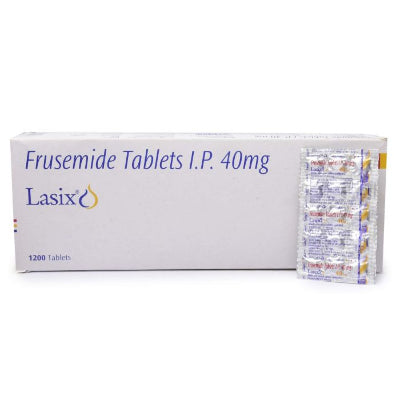
Lasix 40 mg (Furosemide) – Powerful Diuretic for Edema & Blood Pressure
Lasix 40 mg contains Furosemide, a loop diuretic (“water pill”) used to remove excess fluid (edema) and treat high blood pressure. Often prescribed for heart failure, liver cirrhosis, or kidney disease.
Key Benefits:
- Effectively reduces fluid overload and swelling
- Helps manage hypertension—especially when other agents are less effective
- Rapid onset: oral effect begins in 30–60 minutes and lasts about 6–8 hours
How It Works
Furosemide blocks the Na⁺-K⁺-2Cl⁻ transporter in the thick ascending limb of the loop of Henle, promoting excretion of water, sodium, chloride, and potassium. This reduces fluid volume and lowers blood pressure.
Recommended Dosage
For adults with hypertension, 40–80 mg once daily. For edema, initial 20–40 mg orally or IV, repeated or increased as needed (up to 120 mg/day or more in refractory cases). Doses are individualized.
Possible Side Effects
- Increased urination, thirst, dry mouth, dizziness, headache, blurred vision
- Electrolyte disturbances: low potassium, magnesium, sodium, calcium
- Hypotension, dehydration, muscle cramps, weakness
- Ototoxicity: tinnitus or hearing loss (especially high IV doses or with ototoxic drugs)
- Photosensitivity, rash
Report symptoms like confusion, electrolyte imbalance, hearing changes, or extreme weakness to your healthcare provider immediately.
Precautions & Interactions
- Monitor fluid and electrolyte levels regularly—especially potassium and kidney function.
- Use caution in patients with sulfa allergy or severe kidney impairment.
- May exacerbate gout (hyperuricemia) or glucose intolerance.
- Avoid combination with NSAIDs—they may reduce effectiveness and increase nephrotoxicity.
- Use with caution in elderly—start at lower end of dosing range.
- Avoid rapid IV administration—can lead to hearing loss. Administer slowly (1‑2 minutes).
Why Choose Lasix?
- A well-established, FDA‑approved diuretic available in 20, 40 and 80 mg strengths.
- Proven efficacy in managing edema from heart, liver, or kidney conditions and resistant hypertension.
- Flexible routes of administration—oral, IV, IM, or subcutaneous infusion (Furoscix) for refractory cases.
Frequently Asked Questions (FAQs)
1. What is Lasix 40 mg used for?
Used to treat fluid overload (edema) from heart failure, liver cirrhosis, or kidney disease, and as a secondary agent for managing hypertension.
2. How fast does it work, and how long does it last?
Oral Lasix begins working within 30–60 minutes; diuretic effect typically lasts 6–8 hours.
3. What if I miss a dose?
Take it as soon as remembered unless it’s within a few hours of your next scheduled dose—then skip the missed dose. Do not double up.
4. Are potassium supplements necessary?
Often yes—because Lasix can cause hypokalemia. Your doctor may prescribe potassium supplements or a potassium-sparing diuretic.
5. Can Lasix be used during pregnancy or breastfeeding?
Use only under medical supervision. Discuss risks and benefits with your healthcare provider.





Reviews
There are no reviews yet.