
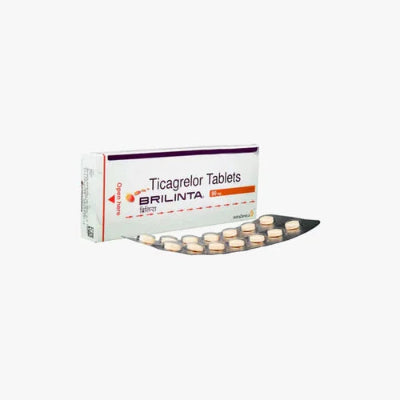
Brilinta 90 mg (Ticagrelor)
Brilinta 90 mg contains ticagrelor, a potent oral antiplatelet medication used to prevent blood clots after a heart attack (ACS) or coronary stent placement. It is usually taken alongside low-dose aspirin as part of **dual antiplatelet therapy (DAPT)** to reduce the risk of recurrent heart attack, stroke, or stent blockage.
Brilinta has a rapid onset of action and provides stronger platelet inhibition compared to clopidogrel, making it a preferred agent in many ACS and post-PCI treatment plans.
Product introduction
Ticagrelor is a reversible P2Y12 receptor antagonist that inhibits platelet activation. It does not require metabolic activation, resulting in faster and more consistent activity. The 90 mg dose is used during the first 12 months following acute coronary syndrome (ACS) or stent placement before optionally switching to the 60 mg maintenance dose.
Uses of Brilinta 90 mg (Ticagrelor)
Prescribed for:
- Acute coronary syndrome (heart attack, unstable angina)
- Post-PCI stent protection (with aspirin)
- Prevention of recurrent heart attack or clot formation
- Secondary prevention in high-risk cardiovascular patients
Note: Dosing must be individualized by a cardiologist based on risk and clinical history.
Benefits of Brilinta 90 mg
- Rapid onset: begins working within hours.
- More potent platelet inhibition: compared to clopidogrel.
- Reduced risk of cardiovascular death: demonstrated in ACS patients.
- Key medicine for stent safety: reduces risk of stent thrombosis.
Side effects of Brilinta 90 mg
Bleeding risk is the most important safety concern.
Common side effects
- Bleeding (bruising, nosebleeds)
- Shortness of breath (dyspnea)
- Dizziness
- Nausea
- Headache
Seek urgent medical help for: coughing blood, black stools, severe breathlessness, fainting, or uncontrolled bleeding.
How to use Brilinta 90 mg (Ticagrelor)
- Standard dose: 90 mg twice daily with low-dose aspirin (75–100 mg daily).
- Take the tablet at the same times each day.
- Can be taken with or without food.
- Do not stop the medication abruptly—this may increase risk of heart attack or stent thrombosis.
- Inform dentists and surgeons before any procedure.
How Brilinta works
Brilinta blocks the P2Y12 receptor on platelets, preventing them from sticking together. This reduces the formation of harmful clots in the coronary arteries, especially after a heart attack or stent placement.
Safety advice
| Bleeding risk | Avoid NSAIDs, blood thinners, and high-dose aspirin unless approved by your doctor. |
| Breathing symptoms | Mild shortness of breath is common; report severe or persistent symptoms. |
| Kidney/Liver issues | Use with caution; dose adjustments or monitoring may be needed. |
| Alcohol | Limit alcohol intake—it may increase bleeding risk. |
| Pregnancy / Breastfeeding | Use only under medical supervision; safety data is limited. |
What if you forget a dose?
- Take the missed dose as soon as you remember.
- If it is almost time for the next dose, skip the missed one.
- Do NOT double the dose.
All substitutes
Alternative antiplatelets include:
- Clopidogrel
- Prasugrel (in eligible PCI patients)
- Aspirin alone (when dual therapy is not possible)
Quick tips
- Carry a medical card indicating you use Brilinta.
- Avoid contact sports or activities with injury risk.
- Report any unusual bleeding or bruising immediately.
- Do not miss doses—essential for stent protection.
Fact Box
| Generic name | Ticagrelor |
| Brand | Brilinta 90 mg |
| Drug class | P2Y12 platelet inhibitor (antiplatelet) |
| Form | Oral tablet (90 mg) |
| Typical dose | 90 mg twice daily for 12 months post-ACS; may switch to 60 mg twice daily thereafter |
| Prescription | Required |
Patient concerns
Why do I feel short of breath? Mild dyspnea is a known effect of ticagrelor. It is usually harmless but check with your cardiologist if severe or worsening.
Can I take Brilinta and aspirin together? Yes — this is required as part of dual antiplatelet therapy unless your doctor instructs otherwise.
User feedback
Patients commonly report reassurance about heart protection and reduced risk of recurrent events. Mild breathlessness and bruising are the most frequently mentioned side effects.
Are you currently taking Brilinta 90 mg? Let us know how it is working for you by taking this survey.
FAQs
Can I take Brilinta with painkillers?
Avoid ibuprofen or other NSAIDs. Paracetamol is generally safer with antiplatelets.
Do I need blood tests?
Routine tests are not always required, but your doctor may monitor if you are at bleeding risk or taking interacting medications.
How should I store Brilinta?
Store in a cool, dry place away from moisture and heat. Keep out of reach of children.
Related products
- Clopidogrel 75 mg
- Prasugrel 10 mg
- Aspirin 75 mg
Want to share the information?
Share this article to help others understand safe antiplatelet use after heart procedures.
Disclaimer:
This article is for educational purposes only and does not replace medical advice. Brilinta (Ticagrelor) must be used under cardiologist supervision. Do not alter dosing without guidance.
Marketer details
genericurerx — support@genericurerx.com — www.genericurerx.com
In case of any issues, contact us
For order queries, prescription verification or delivery support, use live chat or our contact page.
Lab tests offered by us
- Complete blood count
- Kidney & liver function tests
- Cardiac follow-up evaluations
Additional offers
Use code GLOBAL10 on eligible orders for first-time discounts.







Reviews
There are no reviews yet.