
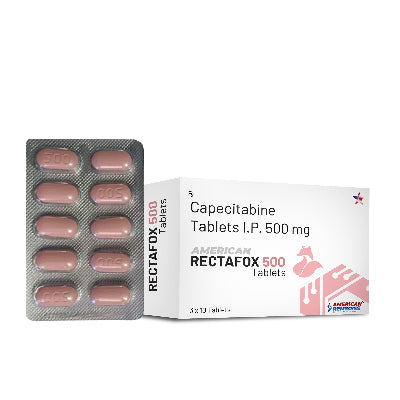
Capecitabine 500 mg
Capecitabine 500 mg is an oral prodrug that is metabolised to 5-fluorouracil (5-FU) in tumour tissue. It is widely used in oncology for the treatment of colorectal cancer (adjuvant and metastatic), certain types of breast cancer, and other fluoropyrimidine-responsive tumours. Capecitabine provides an effective, convenient outpatient alternative to continuous infusion 5-FU in many regimens.
Capecitabine is a prescription cytotoxic medicine. It must be used under the supervision of an oncologist with appropriate baseline assessments and ongoing monitoring.
Product introduction
Capecitabine is converted via a three-step enzymatic pathway to active 5-FU, with the final conversion catalysed by thymidine phosphorylase — an enzyme that is often more active in tumour cells. This tumour-selective activation contributes to capecitabine’s therapeutic index and makes oral dosing practical for many patients.
Typical formulations include 500 mg tablets for flexible dosing. Capecitabine is incorporated into combination chemotherapy schedules (for example CAPOX/XELOX with oxaliplatin) or used as monotherapy where clinically indicated.
Uses of Capecitabine 500 mg
Common indications include:
- Adjuvant treatment for colorectal cancer following surgical resection
- Treatment of metastatic colorectal cancer (alone or in combination)
- Adjuvant or metastatic treatment for certain breast cancers (depending on tumour biology and prior treatments)
- Concurrent use with radiotherapy in selected rectal cancer regimens
- Other fluoropyrimidine-sensitive tumours on oncologist discretion
Note: Indications, dosing schedules and regulatory approvals vary by country. Always follow specialist guidance and local guidelines.
Benefits of Capecitabine 500 mg
Why capecitabine is used:
- Oral dosing: avoids the need for continuous IV infusions in many regimens, improving patient convenience and quality of life.
- Tumour-selective activation: final activation to 5-FU occurs preferentially in tumour tissue.
- Proven efficacy: effective in adjuvant and metastatic colorectal cancer and used in selected breast cancer protocols.
- Flexible scheduling: can be given in cycles (commonly 14 days on, 7 days off) or adapted to specific protocol needs.
In Treatment of Worm infections
Important: Capecitabine is an anticancer chemotherapy and does not treat parasitic or worm infections. This section is present to keep the page layout consistent.
Side effects of Capecitabine 500 mg
Capecitabine has a well characterised adverse-effect profile. Many side effects are manageable with dose modification, symptomatic care and monitoring. Some toxicities can be severe and require treatment interruption.
Common side effects
- Hand-foot syndrome (palmar-plantar erythrodysesthesia) — redness, pain, swelling or blistering of palms and soles
- Diarrhoea and abdominal discomfort
- Nausea and vomiting
- Fatigue and weakness
- Mucositis (oral sores)
- Myelosuppression — neutropenia, anemia, thrombocytopenia (monitored by CBC)
Serious but important risks: severe diarrhoea with dehydration, febrile neutropenia and infections, severe hand-foot syndrome leading to functional impairment, cardiotoxicity (rare — chest pain/arrhythmia), and life-threatening toxicity in patients with dihydropyrimidine dehydrogenase (DPD) deficiency. If you experience fever, severe diarrhoea, bleeding, chest pain or severe hand-foot symptoms, seek urgent medical attention.
How to use Capecitabine 500 mg
- Take exactly as prescribed by your oncologist.
- Common regimen: capecitabine is often given twice daily for 14 days followed by a 7-day break (a 21-day cycle) — dosing is often calculated by body surface area (e.g., 1250 mg/m² twice daily) but protocols vary.
- Take each dose within 30 minutes after a meal with a full glass of water to improve tolerability.
- Swallow tablets whole — do not crush or chew unless your pharmacist advises how to split a dose safely.
- Adhere to scheduled clinic visits and laboratory monitoring (CBC, LFTs, renal function) before and during each cycle.
- Do not stop or change dose without contacting your oncology team; dose reductions or temporary interruptions are common and guided by toxicity management protocols.
If you vomit within one hour of taking a dose, contact your oncology nurse for advice about re-dosing as protocol dependent.
How Capecitabine works
Capecitabine is enzymatically converted to 5-FU in a three-step process. The final step — catalysed by thymidine phosphorylase — preferentially occurs in tumour tissue, releasing 5-FU that inhibits thymidylate synthase and is incorporated into RNA/DNA, disrupting synthesis in rapidly dividing cells and causing tumour cell death.
Safety advice
| Pregnancy | Contraindicated. Capecitabine is teratogenic. Women of childbearing potential must use effective contraception and confirm negative pregnancy tests per protocol. |
| Breastfeeding | Do not breastfeed during treatment and until cleared by your oncology team. |
| DPD deficiency | Patients with partial or complete DPD deficiency are at high risk of severe, potentially fatal toxicity. Pre-treatment testing is recommended where available, or early vigilance for severe toxicity is essential. |
| Liver & Kidney function | Dose adjustments may be required for hepatic or renal impairment. Monitor LFTs and renal function as directed. |
| Cardiac risk | Rare cardiotoxicity has been reported — report chest pain, shortness of breath or palpitations immediately. |
| Drug interactions | Capecitabine interacts with warfarin (increased INR/bleeding risk), certain antivirals and other chemotherapeutic agents. Inform your oncology pharmacist about all medications and supplements. |
| Vaccination | Avoid live vaccines during cytotoxic therapy. Inactivated vaccines may be less effective; discuss timing with your clinician. |
What if you forget to take Capecitabine?
If you miss a dose:
- Take it as soon as you remember on the same day, unless it is almost time for the next dose.
- Do not double up doses to make up for a missed one.
- If several doses are missed, contact your oncology team — cycle timing may need adjustment.
All substitutes
Alternatives or related regimens include:
- Intravenous 5-fluorouracil (5-FU) regimens (bolus or infusion) often with leucovorin
- Capecitabine generics or different branded formulations
- Combination regimens such as CAPOX/XELOX (capecitabine + oxaliplatin) or FOLFIRI/FOLFOX (IV 5-FU based)
- Other chemotherapies or targeted agents chosen based on tumour biology and prior therapy
Substitution must be made by the treating oncologist according to local protocols and patient factors.
Quick tips
- Take capecitabine with food to reduce gastrointestinal side effects.
- Keep hands and feet moisturised and report early signs of hand-foot syndrome.
- Maintain hydration, especially if diarrhoea occurs.
- Carry a treatment card listing your chemotherapy, emergency contact details and instructions.
- Attend all scheduled blood tests — early detection of marrow suppression prevents complications.
Fact Box
| Generic name | Capecitabine |
| Dose | 500 mg tablets (dose per protocol / clinician directed) |
| Drug class | Oral fluoropyrimidine chemotherapy (prodrug of 5-FU) |
| Form | Oral tablet |
| Typical regimen | Commonly 1250 mg/m² twice daily for 14 days followed by 7 days off (protocol dependent) |
| Prescription | Required — oncology specialist |
Patient concerns
Will capecitabine cure my cancer? Capecitabine is an effective component of curative and palliative regimens in appropriate settings. Cure depends on cancer type, stage, combination therapy and individual response — discuss prognosis with your oncologist.
How quickly will I notice effects? Side effects may appear during the first cycle; tumour response is assessed over multiple cycles via imaging and markers per protocol.
User feedback
Many patients value the convenience of oral capecitabine versus continuous IV 5-FU infusion. Commonly reported side effects include fatigue, gastrointestinal upset and hand-foot syndrome; most are manageable with dose adjustments and supportive care.
Are you currently taking Capecitabine 500 mg? Let us know how it is working for you by taking this survey.
FAQs
Can I stop capecitabine when side effects occur?
Do not stop without contacting your oncology team. Many side effects are managed by dose reduction, treatment interruption or supportive therapy. Your specialist will advise the safest approach.
Is capecitabine safe if I have kidney disease?
Dose adjustments may be necessary in renal impairment — inform your oncology team about any kidney problems.
Can capecitabine interact with warfarin?
Yes — capecitabine can increase warfarin effect and bleeding risk. Frequent INR monitoring and dose adjustments of anticoagulants may be needed.
How should I store capecitabine?
Store at room temperature away from moisture and heat. Keep out of reach of children and do not use after expiry.
Related products
- Oxaliplatin (for CAPOX/XELOX regimens)
- 5-Fluorouracil (IV)
- View all oncology medicines
Want to share the information?
Share this article to help patients and caregivers understand capecitabine therapy and safe use.
Disclaimer:
This article is for educational purposes only and does not replace specialist medical advice. Capecitabine must be prescribed and monitored by qualified oncology teams. Do not self-medicate.
References
- Clinical oncology guidelines for colorectal and breast cancer
- Pharmacology and safety literature for capecitabine and fluoropyrimidines
Marketer details
genericurerx — support@genericurerx.com — www.genericurerx.com
In case of any issues, contact us
For ordering or prescription verification use live chat or our contact page. For medical concerns contact your oncology team immediately.
Lab tests offered by us
- Complete Blood Count (CBC)
- Liver Function Tests (LFTs)
- Renal profile
- Cardiac evaluation if clinically indicated
- DPD deficiency testing where available
Additional offers
Patient support, prescription coordination and treatment counselling available on request. Use code GLOBAL10 where eligible for first-order discounts.
What are you using this medicine for?
Select at checkout so our pharmacy team can provide tailored counselling and oncology support.
Know Us
Specialist oncology pharmacy with global delivery and clinical support services.
Our Policies
Prescription verification • Secure handling • Patient privacy protected
Our Services
Worldwide delivery • Oncology pharmacist support • Lab test coordination
Connect
Follow us for oncology treatment updates and patient resources.
Social Links
Facebook • Twitter • LinkedIn • Instagram
Want daily dose of health?
Subscribe for verified oncology content and patient resources.
Reliable
Certified oncology medicines from trusted manufacturers.
Secure
Encrypted checkout and discreet compliant shipping.
Affordable
Competitive pricing and patient support programmes in selected regions.
Know more about genericurerx.com
Access verified oncology information & support
Order medicines online
Order Capecitabine 500 mg — Request prescription verification



Reviews
There are no reviews yet.