
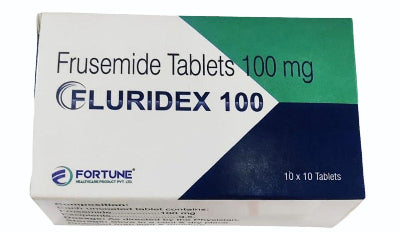

Fluridex 100 mg (Furosemide)
Fluridex 100 mg contains furosemide, a potent loop diuretic used to remove excess fluid (oedema) in conditions such as heart failure, hepatic cirrhosis, renal disease and in certain cases of resistant hypertension. Furosemide increases urinary sodium and water excretion by inhibiting the Na⁺-K⁺-2Cl⁻ transporter in the thick ascending limb of the loop of Henle.
Fluridex 100 mg is a higher oral tablet strength intended for patients who require substantial diuresis or when lower doses are insufficient; dosing must be individualised and supervised by a clinician.
Product introduction
Furosemide is a fast-acting loop diuretic with strong natriuretic (salt-excreting) and diuretic effects. It is commonly used to relieve fluid overload symptoms — breathlessness, peripheral swelling and ascites — and for short-term control of blood pressure in resistant cases. Because of its potency, monitoring of fluid balance, blood pressure, kidney function and electrolytes is essential.
Uses of Fluridex 100 mg (Furosemide)
Typical indications include:
- Acute and chronic heart failure with fluid overload
- Peripheral oedema due to renal or hepatic disease
- Ascites management (adjunctive therapy)
- Control of hypertension in selected, resistant cases
- Acute pulmonary oedema (often in hospital; may require IV therapy)
Note: Use in pregnant or breastfeeding patients should follow specialist advice. Do not self-medicate — diuretic therapy requires clinical assessment and monitoring.
Benefits of Fluridex 100 mg
- Effective fluid removal: rapidly reduces oedema and relieves breathlessness.
- Symptom improvement: improves exercise tolerance and comfort in congestive states.
- Flexible dosing: oral formulation allows outpatient management when appropriate.
- Rapid onset: oral action occurs within 30–60 minutes in most patients.
Recommended dosing
Important: The following are general examples only — individual dosing must be prescribed by a clinician based on indication, renal function and response.
- Typical starting oral dose for oedema: 20–40 mg once or twice daily, titrated up as needed. Doses of 80–100 mg or higher may be used in patients with significant fluid overload or diuretic resistance.
- For severe or acute pulmonary oedema, intravenous dosing under hospital supervision is commonly used.
- Some patients require split dosing (morning and early afternoon) to avoid nocturia.
- Adjust dose with caution in renal impairment — higher doses are sometimes required but should be supervised and monitored.
Side effects of Fluridex 100 mg (Furosemide)
While effective, furosemide can cause important adverse effects that require monitoring.
Common side effects
- Increased urination and nocturia
- Dehydration and low blood pressure (symptomatic hypotension)
- Electrolyte disturbances — low potassium (hypokalaemia), low sodium (hyponatraemia), low magnesium
- Dizziness or lightheadedness
- Muscle cramps
Serious but important risks: severe dehydration, significant electrolyte imbalance, renal function deterioration, gout flare (due to raised uric acid), and ototoxicity (hearing loss or tinnitus) especially with very high doses or rapid IV administration and when combined with other ototoxic drugs (e.g., aminoglycosides). Seek urgent medical attention for fainting, severe dizziness, marked weakness, irregular heartbeat, sudden hearing changes, or very reduced urine output.
How to use Fluridex 100 mg
- Take exactly as prescribed by your healthcare professional.
- Take in the morning (and early afternoon if divided) to reduce night-time urination.
- Monitor weight daily (same time each day) to track fluid loss and response.
- Maintain clear fluid and electrolyte follow-up as directed — do not self-adjust fluid intake without advice.
- If vomiting occurs soon after an oral dose or you are unable to take oral meds, contact your clinician; IV therapy may be required.
How Fluridex works
Furosemide inhibits the Na⁺-K⁺-2Cl⁻ cotransporter in the thick ascending limb of the loop of Henle, blocking sodium and chloride reabsorption. This leads to marked natriuresis and diuresis, decreasing blood volume and relieving congestion in heart failure and other oedematous states.
Safety advice
| Kidney function | Monitor serum creatinine and urine output — dose adjustment may be necessary. Excessive diuresis can worsen renal function. |
| Electrolytes | Check potassium, sodium and magnesium regularly; consider potassium supplementation or potassium-sparing diuretics if indicated and safe. |
| Blood pressure | Risk of symptomatic hypotension — stand up slowly and monitor BP. Avoid sudden position changes if dizzy. |
| Ototoxicity | Risk increased with high doses, rapid IV administration, or concomitant ototoxic drugs (e.g., aminoglycosides). Report hearing loss or tinnitus immediately. |
| Gout / hyperuricaemia | May raise uric acid — patients with gout history should be monitored. |
| Pregnancy & breastfeeding | Use only if clearly needed and after specialist discussion — diuretics are generally used cautiously in pregnancy and breastfeeding. |
| Drug interactions | Caution with ACE inhibitors/ARBs, NSAIDs (may blunt diuretic effect), aminoglycosides, digoxin (risk of arrhythmia with hypokalaemia), lithium (risk of toxicity), and other antihypertensives—inform your prescriber of all medicines and supplements. |
What if you forget a dose?
- Take the missed dose as soon as you remember on the same day unless it is near the time for your next dose.
- If it is almost time for your next dose, skip the missed dose — do not double up.
- If you miss several doses or are unsure, contact your healthcare provider for advice.
All substitutes
Alternative loop diuretics or strategies include:
- Other loop diuretics: bumetanide, torsemide (may be used if response to furosemide is inadequate)
- Thiazide diuretics (e.g., hydrochlorothiazide) for mild hypertension/volume issues (different mechanism)
- Combination diuretic therapy (specialist-directed) or optimisation of heart-failure guideline therapy
Quick tips
- Weigh yourself daily and report rapid changes (gain or loss) to your clinician.
- Keep hydrated but follow fluid recommendations given by your healthcare team.
- Avoid excessive salt intake to improve diuretic response.
- Carry a medicines list and inform other clinicians you are taking a loop diuretic.
Fact Box
| Generic name | Furosemide |
| Brand | Fluridex 100 mg |
| Drug class | Loop diuretic |
| Form | Oral tablet (100 mg) |
| Typical dosing | Individualised — common oral doses 20–400 mg daily divided; 100 mg used where higher diuresis required (prescriber-directed) |
| Prescription | Required — clinician monitoring recommended |
Patient concerns
Will Fluridex make me urinate a lot? Yes — increased urine output is the expected effect and may cause more frequent daytime (and initially night-time) urination. Timing doses earlier in the day can reduce nocturia.
Will I need blood tests? Yes — clinicians routinely check electrolytes, kidney function and sometimes uric acid during treatment, especially after dose changes.
User feedback
Many patients report rapid relief of breathlessness and swelling after starting an effective diuretic regimen. Common complaints include increased urination, cramps or lightheadedness—most improve with dose adjustment and monitoring.
FAQs
Can I take Fluridex every day?
Some patients take daily maintenance doses while others use it intermittently under clinician supervision. Frequency and dose depend on the underlying condition and response — follow your prescriber’s instructions.
Should I take potassium supplements?
Not routinely — potassium supplementation depends on blood test results. Your clinician may prescribe potassium or recommend dietary measures if hypokalaemia occurs.
How should I store Fluridex?
Store at room temperature away from moisture and heat. Keep out of reach of children and do not use past the expiry date.
Related products
- Bumetanide (loop diuretic)
- Torsemide (loop diuretic)
- Thiazide diuretics (HCTZ)
- Heart-failure therapies (ACEi/ARB/ARNI, beta-blocker, MRA, SGLT2 inhibitor)
Want to share the information?
Share this article to help patients and caregivers understand safe use of loop diuretics like furosemide.
Disclaimer:
This information is for educational purposes only and does not replace personalised medical advice. Fluridex (furosemide) must be prescribed and monitored by a qualified clinician. Do not change or stop diuretic therapy without consulting your healthcare provider.
Marketer details
genericurerx — support@genericurerx.com — www.genericurerx.com
In case of any issues, contact us
For order or prescription verification use live chat or our contact page. For medical emergencies (severe dehydration, fainting, severe electrolyte disturbance, sudden hearing loss) seek immediate medical care.
Lab tests offered by us
- Serum electrolytes (sodium, potassium, magnesium)
- Kidney function tests (creatinine, eGFR)
- Uric acid level where indicated
- Fluid-balance and weight monitoring
Additional offers
Prescription coordination and monitoring services available on request. Use code GLOBAL10 where eligible for first-order discounts.



Reviews
There are no reviews yet.