
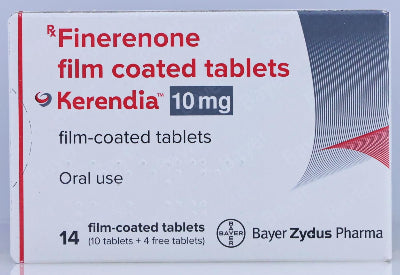


Kerendia 10 mg (Finerenone)
Kerendia 10 mg contains finerenone, a non-steroidal mineralocorticoid receptor antagonist (ns-MRA) indicated to slow progression of chronic kidney disease associated with type 2 diabetes and to reduce cardiovascular risk in this population. Finerenone is prescribed as part of an optimised care plan and requires regular monitoring of kidney function and serum potassium.
Kerendia should be initiated and supervised by clinicians experienced in managing CKD and diabetes, because dosing depends on baseline kidney function and concomitant medicines.
Product introduction
Finerenone selectively blocks mineralocorticoid receptors involved in inflammation and fibrosis in the kidney and heart. The 10 mg tablet is commonly used as the starting dose or as maintenance in patients with reduced renal function where a lower dose is recommended. Regular laboratory monitoring is necessary to ensure safety and effectiveness.
Uses of Kerendia 10 mg (Finerenone)
Indicated for adults with:
- Chronic kidney disease (CKD) associated with type 2 diabetes
- Persistent albuminuria despite optimised renin–angiotensin system blockade (ACEi/ARB) or where appropriate
- Elevated cardiovascular risk related to diabetic kidney disease
Note: Use only when recommended by a specialist or treating clinician; eligibility and dosing depend on eGFR and potassium levels.
Benefits of Kerendia 10 mg
- Slows kidney disease progression: reduces risk of worsening kidney outcomes and sustained eGFR decline.
- Reduces cardiovascular risk: lowers risk of heart-failure events and cardiovascular complications in appropriate patients.
- Non-steroidal action: selective mechanism with a different side-effect profile compared with steroidal MRAs.
Side effects of Kerendia 10 mg
Common adverse effects relate to electrolyte and renal changes; hyperkalemia is the principal concern.
Common side effects
- Elevated serum potassium (hyperkalemia)
- Transient reduction in eGFR when starting therapy
- Dizziness or low blood pressure in some patients
- Fatigue
Seek urgent medical attention for: symptoms suggesting very high potassium (muscle weakness, palpitations, irregular heartbeat), severe dizziness, or syncope.
How to use Kerendia 10 mg (Finerenone)
- Take once daily, with or without food, at the same time each day.
- The 10 mg dose is commonly used to start therapy in patients with reduced kidney function or other factors requiring a lower initiation dose; clinicians may increase to 20 mg once daily where appropriate and safe.
- Baseline serum potassium and eGFR must be checked before starting; repeat tests soon after initiation, after dose changes, and periodically thereafter as advised by your clinician.
- Do not take potassium supplements or potassium-sparing diuretics unless approved by your prescriber.
- If you miss a dose, take it the same day if you remember; otherwise skip and resume the usual schedule—do not double doses.
How Kerendia works
Finerenone antagonises mineralocorticoid receptors in the kidney and heart, reducing inflammation and fibrosis that contribute to CKD progression and cardiovascular events. Its selective, non-steroidal profile aims to provide organ protection while minimising some hormonal side effects.
Safety advice
| Kidney function | Measure eGFR before starting and periodically. Dose decisions depend on baseline renal function and trends. |
| Potassium monitoring | Check serum potassium before starting, within 1–4 weeks after initiation or dose change, then periodically. Hyperkalemia may require dose reduction, interruption or discontinuation. |
| Drug interactions | Avoid strong CYP3A4 inhibitors/inducers. Use caution with ACE inhibitors/ARBs, potassium supplements, or potassium-sparing diuretics—monitor closely if combined. |
| Pregnancy / Breastfeeding | Use only if clearly needed — discuss risks and benefits with your clinician. |
| Liver disease | Use caution in moderate hepatic impairment; avoid in severe hepatic dysfunction unless advised by a specialist. |
What if you forget a dose?
- Take the missed dose as soon as you remember the same day.
- If the whole day has passed, skip the missed dose and take the next scheduled dose as usual.
- Do not double doses to make up for a missed dose.
All substitutes
Therapeutic alternatives and complementary agents include:
- SGLT2 inhibitors (dapagliflozin, empagliflozin) — kidney and CV protective in T2D with CKD
- ACE inhibitors or ARBs — foundational renin–angiotensin system blockade
- Steroidal MRAs (spironolactone, eplerenone) — different risk/benefit profiles and indications
Quick tips
- Bring recent potassium and eGFR results to appointments.
- Avoid potassium supplements and salt substitutes containing potassium unless approved.
- Report muscle weakness, palpitations or marked lightheadedness promptly.
- Continue other kidney-protective measures (BP control, glycaemic control, lifestyle) alongside Kerendia.
Fact Box
| Generic name | Finerenone |
| Brand | Kerendia 10 mg |
| Drug class | Non-steroidal mineralocorticoid receptor antagonist (ns-MRA) |
| Form | Oral tablet (10 mg) |
| Typical dosing | 10–20 mg once daily based on kidney function and potassium; 10 mg commonly used for initiation or patients needing a lower dose. |
| Prescription | Required — clinician supervision and laboratory monitoring |
Patient concerns
Can Kerendia restore kidney function? Kerendia is intended to slow progression of CKD and reduce related cardiovascular risk; it is not typically used to reverse established loss of kidney function.
Will I need frequent blood tests? Yes — baseline and periodic potassium and eGFR checks are necessary, especially after starting or changing dose.
User feedback
Many patients report stabilisation of kidney markers and reassurance from added cardiovascular risk reduction when Kerendia is used alongside standard care. The main manageable concern reported is elevated potassium, which is typically addressed with monitoring and dose adjustment.
FAQs
Can I take Kerendia with an ACE inhibitor or ARB?
Yes — Kerendia is often used in addition to optimised ACE inhibitor or ARB therapy, but close monitoring of potassium and kidney function is required.
Is Kerendia safe if my potassium is high?
Treatment is usually delayed, reduced or stopped if baseline potassium is elevated; your clinician will advise based on lab results.
How should I store Kerendia?
Store at room temperature away from moisture and heat. Keep out of reach of children and do not use past the expiry date.
Related products
- Dapagliflozin / Empagliflozin (SGLT2 inhibitors)
- Spironolactone / Eplerenone (steroidal MRAs)
- ACE inhibitors / ARBs
Want to share the information?
Share this article to help others understand Kerendia therapy and safe use in diabetic kidney disease.
Disclaimer:
This article is educational only and does not replace professional medical advice. Kerendia (finerenone) must be prescribed and monitored by a qualified clinician with routine potassium and kidney-function testing.
Marketer details
genericurerx — support@genericurerx.com — www.genericurerx.com
In case of any issues, contact us
For order or prescription verification, use live chat or our contact page. For medical concerns contact your treating clinician immediately.
Lab tests offered by us
- Serum potassium
- eGFR / kidney panel
- Urine albumin-creatinine ratio (ACR)
- Diabetes metabolic panel
Additional offers
Use code GLOBAL10 for applicable first-order discounts.








Reviews
There are no reviews yet.