
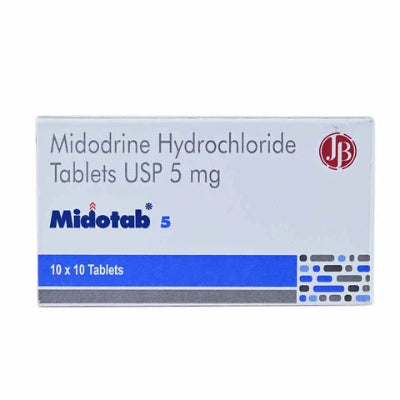


Midotab 5 mg (Midodrine)
Midotab 5 mg contains midodrine hydrochloride, an oral selective α1-adrenergic agonist indicated for symptomatic orthostatic hypotension in patients who remain symptomatic despite non-drug measures. It raises standing blood pressure by causing peripheral vasoconstriction but can produce elevated supine blood pressure and other vasoconstrictive/adverse effects; specialist prescription and monitoring are required. :contentReference[oaicite:0]{index=0}
Product introduction
Midodrine improves upright blood pressure and symptoms (dizziness, lightheadedness, syncope) for many patients with symptomatic orthostatic hypotension. Therapy is generally started at low doses and titrated to clinical effect while monitoring for supine hypertension and urinary/vascular side effects. :contentReference[oaicite:1]{index=1}
Uses of Midotab 5 mg (Midodrine)
Typical, specialist-directed uses include:
- Symptomatic orthostatic hypotension (neurogenic or other causes) where non-pharmacologic measures are insufficient. :contentReference[oaicite:2]{index=2}
- Off-label or supportive use in selected inpatient/critical-care settings under expert supervision. :contentReference[oaicite:3]{index=3}
Note: Treatment continuation should be guided by symptomatic benefit and safety monitoring—stop if no clinically meaningful improvement. :contentReference[oaicite:4]{index=4}
Benefits of Midotab 5 mg (Midodrine)
- Raises standing blood pressure: reduces dizziness and syncope related to orthostatic hypotension.
- Oral, rapid onset: doses given during daytime upright hours provide symptomatic relief.
- Usable when compression, fluids and nonpharmacologic measures are inadequate.
Recommended dosing
Typical adult dosing strategies (individualised by the treating clinician):
- Initial low dose often 2.5 mg three times daily, then titrate as needed. :contentReference[oaicite:5]{index=5}
- Common maintenance/target dosing: up to 10 mg three times daily during daytime hours (do not dose close to bedtime / not less than 4 hours before lying down) to reduce supine hypertension risk. :contentReference[oaicite:6]{index=6}
- Do not give doses more frequently than every ~3–4 hours; maximum single doses and total daily dose depend on product labelling and clinician judgement. :contentReference[oaicite:7]{index=7}
Side effects of Midotab 5 mg (Midodrine)
Adverse effects relate to systemic α-adrenergic stimulation and include vascular, neurologic and urinary symptoms.
Common side effects
- Supine hypertension — potentially serious and common enough to require monitoring. :contentReference[oaicite:8]{index=8}
- Piloerection / goosebumps and scalp tingling/itching. :contentReference[oaicite:9]{index=9}
- Urinary urgency, hesitation or retention. :contentReference[oaicite:10]{index=10}
- Headache, chills, nausea or feelings of coldness. :contentReference[oaicite:11]{index=11}
Important risks: severe supine hypertension, bradycardia (reflex), and urinary retention—seek urgent care for severe headache, chest pain, marked blood-pressure elevation when supine, or new urinary retention. :contentReference[oaicite:12]{index=12}
How to use Midotab 5 mg
- Take exactly as prescribed. Space daytime doses (morning, midday, late afternoon) and avoid dosing within ~4 hours of bedtime to reduce risk of supine hypertension. :contentReference[oaicite:13]{index=13}
- Start at a low dose (e.g., 2.5 mg TID) and titrate based on standing BP response and side effects under clinician supervision. :contentReference[oaicite:14]{index=14}
- Measure and record orthostatic and supine blood pressures per clinician instructions; periodic review is required. :contentReference[oaicite:15]{index=15}
- Do not abruptly stop without clinician advice; adjust other vasoactive medications carefully to avoid interactions. :contentReference[oaicite:16]{index=16}
How Midotab works
Midodrine is a prodrug converted to an active metabolite that stimulates peripheral α1-adrenergic receptors, causing vasoconstriction and increased peripheral vascular resistance — this raises standing blood pressure and reduces orthostatic symptoms. :contentReference[oaicite:17]{index=17}
Safety advice
| Supine hypertension | Monitor supine BP regularly. Avoid dosing close to bedtime and discontinue or reduce dose if persistent or severe supine hypertension occurs. :contentReference[oaicite:18]{index=18} |
| Urinary retention / prostate disease | Avoid or use with caution in patients with significant urinary retention or severe prostatic hypertrophy. Assess urinary symptoms regularly. :contentReference[oaicite:19]{index=19} |
| Severe heart disease / vascular disease | Contraindicated or used with extreme caution in severe organic heart disease, acute renal disease, pheochromocytoma or thyrotoxicosis—disclose all comorbidities to your prescriber. :contentReference[oaicite:20]{index=20} |
| Pregnancy & breastfeeding | Use only if clearly needed and after clinician discussion—limited data; consult your clinician. :contentReference[oaicite:21]{index=21} |
| Drug interactions | Caution with other agents that raise blood pressure or affect heart rate; review full medication list with your prescriber/pharmacist. :contentReference[oaicite:22]{index=22} |
What if you forget a dose?
- Take the missed daytime dose as soon as you remember unless it is within ~4 hours of bedtime; do not double doses. If in doubt, contact your prescriber. :contentReference[oaicite:23]{index=23}
All substitutes
Other management options for orthostatic hypotension (individualised):
- Nonpharmacologic: compression stockings, increased fluids/salt, physical counter-maneuvers
- Other pharmacologic options: fludrocortisone, droxidopa (specialist choice depending on cause and comorbidities)
Quick tips
- Measure both supine and standing BPs and keep a log to show your clinician.
- Avoid lying flat soon after dosing; take the last dose well before bedtime.
- Report new urinary difficulty, severe headache, chest pain or syncope promptly.
- Use the medication only if you experience meaningful symptomatic benefit. :contentReference[oaicite:24]{index=24}
Fact Box
| Generic name | Midodrine hydrochloride |
| Brand | Midotab 5 mg |
| Drug class | Peripheral α1-adrenergic agonist (vasopressor for orthostatic hypotension) |
| Form | Oral tablet (5 mg) |
| Typical dosing | Start low (e.g., 2.5 mg TID) and titrate; usual effective dosing up to 10 mg three times daily during daytime hours. Do not dose close to bedtime. :contentReference[oaicite:25]{index=25} |
| Prescription | Required — specialist/physician supervision and monitoring |
Patient concerns
Will Midotab cure my low blood pressure? No medication cures underlying causes; midodrine alleviates symptoms of orthostatic hypotension but success varies and long-term use should be judged by symptomatic benefit and safety monitoring. :contentReference[oaicite:26]{index=26}
How soon will I notice benefits? Blood-pressure and symptomatic improvements can be seen shortly after dosing; titration over days–weeks is often needed. :contentReference[oaicite:27]{index=27}
User feedback
Many patients report fewer dizzy spells and improved ability to stand/walk when midodrine is effective and carefully monitored. Common complaints include scalp tingling/piloerection and occasional supine hypertension which requires dose adjustment or discontinuation. :contentReference[oaicite:28]{index=28}
FAQs
Can I take Midotab at night?
No — avoid dosing within ~4 hours of bedtime to reduce the risk of supine hypertension. Follow your prescriber’s specific timing guidance. :contentReference[oaicite:29]{index=29}
Is there monitoring required?
Yes — regular supine and standing BP checks and assessment for urinary symptoms, and periodic review of clinical benefit vs risks. Discontinue if no meaningful improvement. :contentReference[oaicite:30]{index=30}
How should I store Midotab?
Store at room temperature away from moisture and heat; keep out of reach of children.
Related products
- Fludrocortisone (mineralocorticoid for orthostatic hypotension)
- Droxidopa (norepinephrine precursor for neurogenic orthostatic hypotension)
- Compression stockings & non-drug measures
Want to share the information?
Share this article to help patients and clinicians understand midodrine therapy and safe use.
Disclaimer:
This article is educational only and does not replace clinical advice. Midotab (midodrine) must be prescribed and monitored by qualified clinicians. Follow local product labelling and specialist guidance. :contentReference[oaicite:31]{index=31}
Marketer details
genericurerx — support@genericurerx.com — www.genericurerx.com
In case of any issues, contact us
For ordering or prescription verification use live chat or our contact page. For medical concerns contact your treating clinician immediately.
References
- ProAmatine (midodrine) Prescribing Information — FDA label. :contentReference[oaicite:32]{index=32}
- Midodrine dosing and patient guidance — Mayo Clinic / Drugs.com prescribing summaries. :contentReference[oaicite:33]{index=33}
- NICE evidence summary and safety signals (piloerection, urinary retention, supine hypertension). :contentReference[oaicite:34]{index=34}
- Therapeutic references and product information (TGA / country product monographs). :contentReference[oaicite:35]{index=35}




Reviews
There are no reviews yet.