
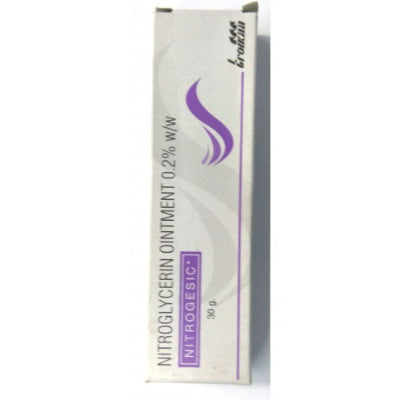

Nitrogesic Ointment 30 g (Nitroglycerin / Glyceryl Trinitrate)
Nitrogesic Ointment 30 g contains nitroglycerin (glyceryl trinitrate) in a topical ointment base. Topical nitroglycerin is commonly used to reduce internal anal sphincter tone and improve local blood flow, making it a non-surgical option for symptomatic management of chronic anal fissure and related local ischaemia. Use should follow clinician advice; many regions treat this as a prescription-only product.
Topical GTN works by producing local nitric oxide–mediated smooth muscle relaxation. It is chosen for its non-invasive nature and demonstrated ability to promote fissure healing and reduce pain in many patients, though local and systemic side effects can occur.
Product introduction
Nitrogesic 30 g provides a measured topical preparation that can be applied to the anal margin or administered via applicator as directed. It offers an alternative to surgical sphincterotomy or botulinum toxin for selected patients, especially those seeking to avoid immediate surgery. Treatment plans should be individualised, and duration varies (commonly several weeks) depending on response and tolerability.
Uses of Nitrogesic Ointment 30 g
Common indications include:
- Chronic anal fissure (symptomatic management and promotion of healing)
- Anal pain related to local sphincter hypertonicity and ischaemia
- Adjunctive use with stool softeners and topical analgesia as part of conservative fissure care
Note: Use patterns and approvals vary by country—follow your clinician’s instructions. This ointment is not a treatment for haemorrhoids, systemic angina, or other cardiac indications. For chest pain, seek emergency care and use only formulations intended for that purpose (e.g., sublingual nitroglycerin) under medical advice.
Benefits of Nitrogesic Ointment 30 g
Key benefits when used appropriately:
- Local sphincter relaxation: reduces resting anal sphincter pressure, promoting blood flow and fissure healing.
- Non-surgical option: avoids immediate invasive procedures in many patients.
- Easy outpatient use: topical application at home with follow-up.
- Symptom relief: can reduce pain and spasm associated with chronic fissures.
Side effects of Nitrogesic Ointment 30 g
Topical nitroglycerin can produce both local and systemic adverse effects; most are dose-related and may be transient.
Common side effects
- Headache — the most frequent systemic complaint (may be severe in some patients)
- Local irritation or burning at application site
- Facial flushing or lightheadedness
- Transient hypotension/dizziness (rare with low topical exposure but possible)
Important risks: severe headache, marked hypotension or syncope — stop and seek medical attention if these occur. Avoid driving or operating machinery until you know how the ointment affects you. Discuss use with your clinician if you take medicines for erectile dysfunction (PDE5 inhibitors) or are on other vasodilators — interactions can cause profound hypotension.
How to use Nitrogesic Ointment 30 g
- Use only as prescribed. A common regimen is a small pea-sized amount (or measured dose per clinician) applied to the anal canal/margins two to three times daily for up to 6–8 weeks — follow local guidance.
- Apply gently with a gloved finger or supplied applicator; wash hands after application.
- Avoid contact with eyes and mucous membranes. If accidental ocular contact occurs, rinse thoroughly with water and seek advice.
- Use alongside stool softeners, fibre and local care to reduce strain and support healing.
- If severe headache or dizziness occurs, pause treatment and contact your prescriber; dose modification or alternative therapy may be required.
- Do not use this topical formulation for relief of angina or chest pain — it is not formulated or dosed for systemic cardiac indications.
How Nitrogesic works
Nitroglycerin releases nitric oxide locally, causing smooth muscle relaxation by increasing cyclic GMP in vascular and sphincter smooth muscle. This reduces internal anal sphincter tone, improves local blood flow, relieves ischaemia and promotes fissure healing.
Safety advice
| Pregnancy / Breastfeeding | Discuss with your clinician. Topical use is typically local, but safety data in pregnancy/breastfeeding are limited—use only if advised by a clinician. |
| Concomitant medications | Avoid use with PDE5 inhibitors (sildenafil, tadalafil, vardenafil) and other systemic nitrates — combined use can cause severe hypotension. Inform your prescriber about all medicines and supplements. |
| Cardiovascular disease | Use with caution in patients with hypotension, severe anaemia, increased intracranial pressure, or recent MI unless advised by cardiology — even topical nitrate can lower blood pressure in sensitive individuals. |
| Driving / machinery | Headache, dizziness or hypotension may impair ability to drive or operate machinery — avoid these activities until you know how you react. |
| Allergy | If you develop rash, severe local reaction or signs of allergy (swelling, breathing difficulty), discontinue and seek urgent care. |
| Application precautions | Do not apply to broken skin beyond the fissure site unless instructed; avoid excessive quantities to limit systemic absorption. |
What if you forget to use Nitrogesic?
- If you miss an application, apply as soon as you remember on the same day, then continue as usual. Do not double the next application.
- If multiple doses are missed, follow-up with your clinician to reassess the treatment plan.
All substitutes
Alternative treatments for chronic anal fissure or sphincter hypertonicity include:
- Topical calcium channel blockers (e.g., 0.2% diltiazem cream) — often used as an alternative to GTN
- Botulinum toxin injection into the internal sphincter (performed by specialist)
- Surgical lateral internal sphincterotomy (reserved for refractory cases)
- Conservative measures: stool softeners, high-fibre diet, topical analgesics
Choice of therapy is individualised by the treating clinician based on severity, comorbidities and tolerance to therapies.
Quick tips
- Start stool softeners and dietary fibre to reduce strain and support healing.
- Expect headaches early—if severe, report to your clinician; they are a common reason to switch therapy.
- Use measured small amounts—excess increases systemic side effects risk.
- Keep treatment for the prescribed duration even if symptoms improve early, unless advised otherwise.
Fact Box
| Generic name | Nitroglycerin (Glyceryl trinitrate) |
| Brand | Nitrogesic Ointment 30 g |
| Drug class | Topical nitrate (vasodilator) |
| Form | Topical ointment (30 g tube) |
| Typical regimen | Small measured application to anal margin / canal 2–3 times daily for several weeks (follow prescriber instructions) |
| Prescription | Often required — consult specialist or prescriber |
Patient concerns
Will Nitrogesic cure my fissure? Many patients experience healing or significant symptom relief with topical nitroglycerin combined with conservative measures. Response varies—some require alternative therapies or surgical referral. Discuss expectations with your clinician.
How long until I notice improvement? Pain relief may begin within days; healing often assessed over several weeks. If no improvement after the prescribed course, return to your clinician for reassessment.
User feedback
Users commonly report initial headache and facial flushing but many appreciate decreased anal pain and spasm. Some switch to topical diltiazem or consider botulinum toxin if headaches are intolerable or response is inadequate.
Are you using Nitrogesic Ointment 30 g? Let us know how it helped by taking our survey.
FAQs
Can I use Nitrogesic for chest pain (angina)?
No. This topical formulation is intended for local anal use. For angina or chest pain use only medications/formulations specifically prescribed for cardiac indications (e.g., sublingual nitroglycerin) and seek emergency care for chest pain.
Can nitroglycerin ointment cause fainting?
Yes—particularly if you become hypotensive or combine with other vasodilators. If you feel lightheaded, sit or lie down and contact your prescriber. Avoid sudden standing after application until you know how it affects you.
Can I use it with erectile dysfunction medicines?
No. Do not use topical nitroglycerin concurrently with PDE5 inhibitors (sildenafil, tadalafil, vardenafil) or other nitrates — the combination can produce severe and potentially dangerous drops in blood pressure.
How should I store Nitrogesic?
Store at room temperature away from heat and direct light. Keep the tube tightly closed and out of reach of children. Do not use past the expiry date.
Related products
- Topical diltiazem 0.2% cream (for anal fissure)
- Botulinum toxin injection services (specialist procedure)
- Stool softeners and bulk-forming fibre supplements
Want to share the information?
Share this page to help patients and carers understand topical nitroglycerin therapy and safe use.
Disclaimer:
This article is for educational purposes only and does not replace professional medical advice. Nitrogesic (nitroglycerin ointment) must be used under clinician guidance. Do not self-medicate or use for cardiac indications without appropriate formulation and supervision.
References
- Clinical guidance on topical nitrates for chronic anal fissure and conservative management strategies.
- Pharmacology literature on nitrates, systemic absorption and adverse effects.
Marketer details
genericurerx — support@genericurerx.com — www.genericurerx.com
In case of any issues, contact us
For ordering or prescription verification use live chat or our contact page. For medical concerns contact your treating clinician immediately.
Lab tests offered by us
- Blood pressure monitoring if clinically indicated
- General clinical review and specialist referral options
Additional offers
Prescription coordination and clinical counselling available on request. Use code GLOBAL10 where eligible for first-order discounts.



Reviews
There are no reviews yet.