
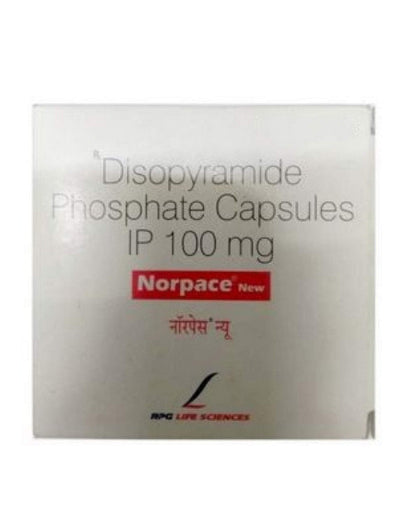

Buy Norpace 100 mg (Disopyramide) – Class Ia Anti‑Arrhythmic for Ventricular Tachycardia
Norpace 100 mg contains disopyramide phosphate, a Class Ia sodium‑channel blocker used to suppress life‑threatening ventricular arrhythmias such as sustained ventricular tachycardia.
How It Works
Disopyramide slows cardiac conduction by blocking phase 0 sodium channels, prolonging action potentials and refractory periods. It also has negative inotropic and anticholinergic effects, reducing myocardial contractility.
Indications & Benefits
- Treats documented ventricular tachycardia and ventricular fibrillation when other agents have failed.
- Common off‑label use in hypertrophic obstructive cardiomyopathy (HOCM) to reduce left ventricular outflow tract obstruction.
Dosage & Administration
- Typical adult maintenance dose: 400–800 mg daily, divided doses (e.g. 100 mg QID or CR formulation). Initiate treatment in hospital settings for monitoring.
- Capsules should be swallowed whole. Multiple daily doses should be spaced evenly. Regular ECG and renal monitoring advised.
- Do not abruptly stop—consult your physician for dose taper.
Common Side Effects & Safety
- High incidence anticholinergic: dry mouth (~32%), urinary hesitancy (~14%), constipation (~11%); blurred vision, dry eyes/nose/throat also reported.
- General: dizziness, fatigue, headache, malaise, muscle weakness, nausea, bloating, rash, edema. (~3‑9%)
- Cardiac: severe hypotension, congestive heart failure, conduction disturbances, AV block, QRS/QT prolongation. Use caution in LV dysfunction.
- Endocrine/Hematologic: hypoglycemia, hypokalemia, elevated lipids, rare agranulocytosis or thrombocytopenia.
- Rare hepatotoxicity: mild or cholestatic liver injury may occur—monitor liver enzymes.
Precautions & Drug Interactions
- Contraindicated: cardiogenic shock, severe AV block without pacemaker, congenital QT prolongation, allergy.
- Caution in patients with heart failure, hypokalemia, glaucoma, benign prostatic hypertrophy (BPH), myasthenia gravis. May worsen symptoms.
- Reduce dose in renal or hepatic impairment; elderly patients at higher risk—monitor function.
- Avoid with other Class Ia/C antiarrhythmics, CYP3A4 inhibitors (eg clarithromycin, erythromycin), phenytoin, and verapamil (within 48 h) due to fatal interaction risk.
- Alcohol may enhance side effects such as hypotension, dizziness, and hypoglycemia. Avoid while on therapy.
Global Availability & Prescription Info
Norpace 100 mg is prescription-only. In most cases, treatment is managed by a cardiology or electrophysiology specialist. Initiation often occurs under close clinical supervision with ECG and lab monitoring. Global shipping available via licensed pharmacies.
📌 Frequently Asked Questions (FAQs)
1. What is Norpace 100 mg used for?
It treats serious ventricular arrhythmias like sustained VT/VF and may be used off-label in HOCM to reduce outflow gradients and symptoms.
2. How soon does it work?
The onset is within 30 minutes; effects may last up to 8 hours per dose. Full antiarrhythmic effect may require 1–2 days of regular dosing.
3. What side effects are common?
Expect dry mouth, urinary hesitancy, constipation, dizziness, fatigue, blurred vision. Watch for heart rhythm changes or fluid retention—seek prompt medical advice if severe.
4. Can I suddenly stop it?
No—abrupt discontinuation may worsen arrhythmia. Consult your physician for tapering instructions.
5. Is alcohol or driving safe while on Norpace?
Avoid alcohol—it can worsen side effects. Don’t drive or operate machinery until you assess tolerance, especially if experiencing dizziness or vision issues.




Reviews
There are no reviews yet.