
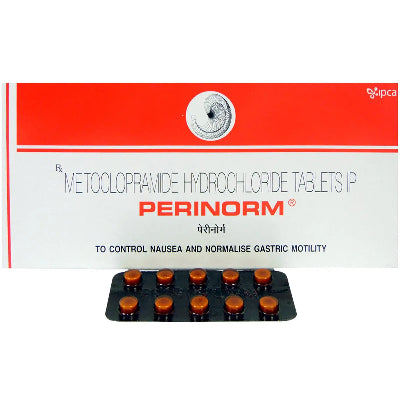


Perinorm 10 mg (Metoclopramide)
Perinorm 10 mg contains metoclopramide, a dopamine-2 receptor antagonist widely used to relieve **nausea, vomiting**, and to improve **gastric motility** in conditions such as gastroparesis and acid reflux. It works by enhancing stomach emptying and increasing the tone of the lower esophageal sphincter.
Perinorm should be used under medical supervision due to the risk of neurological side effects, especially with prolonged or high-dose use. It is generally recommended for short-term treatment.
Product introduction
Metoclopramide is both an **antiemetic** and a **prokinetic** agent. It acts on the chemoreceptor trigger zone to reduce nausea and also stimulates upper gastrointestinal motility. Perinorm 10 mg is the standard adult oral dose used for rapid symptom relief and short-term therapy.
Uses of Perinorm 10 mg (Metoclopramide)
Common indications include:
- Nausea and vomiting from infections, postoperative states, medications, etc.
- Gastroesophageal reflux disease (GERD)
- Diabetic gastroparesis (delayed stomach emptying)
- Prevention of nausea during chemotherapy or radiotherapy (adjunctive use)
- Assisting gastric emptying during diagnostic procedures (as directed)
Note: Because of side-effect risks, therapy duration is typically limited unless specifically advised by a clinician.
Benefits of Perinorm 10 mg
- Rapid relief of nausea and vomiting
- Improves stomach motility, helpful for bloating or slow digestion
- Useful in diabetic gastroparesis under specialist guidance
- Can be used short-term in many gastrointestinal disorders
Other potential uses
Metoclopramide may sometimes be used for migraine-associated nausea as part of a treatment plan.
Side effects of Perinorm 10 mg
Side effects vary by dose and duration; neurological reactions are the most important to monitor.
Common side effects
- Drowsiness or fatigue
- Restlessness or agitation
- Dizziness
- Diarrhea
Serious risks: involuntary muscle movements (extrapyramidal symptoms), tremors, rigidity, facial spasms, oculogyric crisis, and rarely tardive dyskinesia with prolonged use. Seek medical help immediately if abnormal movements or severe restlessness occur.
How to use Perinorm 10 mg (Metoclopramide)
- Usual adult dose: **10 mg up to 3 times daily**, 30 minutes before meals. Your doctor may adjust this.
- Take with a small amount of water; may be taken with or without food unless directed otherwise.
- Do not exceed the prescribed dose — high doses increase neurological side-effect risk.
- Limit duration of use (often ≤ 5 days unless specifically instructed).
- Elderly patients should use with special caution due to increased sensitivity.
How Perinorm works
Metoclopramide blocks dopamine receptors in the chemoreceptor trigger zone to prevent vomiting and enhances acetylcholine activity in the upper gastrointestinal tract, increasing gastric emptying and intestinal movement.
Safety advice
| Pregnancy | Often considered safe for short-term use, but use only if recommended by a clinician. |
| Breastfeeding | Small amounts pass into breast milk; seek medical advice before use. |
| Neurological conditions | Avoid in Parkinson’s disease or history of movement disorders. |
| Alcohol | Avoid alcohol — increases drowsiness. |
| Drug interactions | Caution with antipsychotics, sedatives, opioids, and medicines affecting dopamine or serotonin levels. |
| Driving & alertness | May cause drowsiness — avoid driving or operating machinery until you know your response. |
What if you forget a dose?
- Take it when you remember if it’s not too close to the next dose.
- Skip it if the next dose is due soon.
- Do NOT double the dose.
All substitutes
Other antiemetic & prokinetic options include:
- Domperidone
- Ondansetron
- Itopride
- Prochlorperazine (in select cases)
Quick tips
- Take 30 minutes before meals for best effect.
- Avoid prolonged use — discuss alternatives if needing long-term treatment.
- Report abnormal movements immediately.
- Stay hydrated if vomiting is severe.
Fact Box
| Generic name | Metoclopramide |
| Brand | Perinorm 10 mg |
| Drug class | Antiemetic / Prokinetic |
| Form | Oral tablet (10 mg) |
| Typical dose | 10 mg up to 3 times daily (short-term only) |
| Prescription | Required |
Patient concerns
Can Perinorm be used for long periods? No — long-term use increases the risk of serious neurological reactions. Short-term use only unless supervised by a specialist.
Why do I feel restless? Metoclopramide can cause akathisia (inner restlessness). Contact your doctor if this happens.
User feedback
Patients commonly report quick relief from nausea and improved digestion. Side effects like drowsiness or restlessness occur in some individuals, especially at higher doses.
Are you currently taking Perinorm 10 mg? Let us know how it is working for you by taking this survey.
FAQs
Can I take Perinorm with painkillers?
Paracetamol is usually safe; avoid sedative or dopamine-acting medicines unless advised.
Is Perinorm safe for children?
Use only under strict medical supervision — risks of movement disorders are higher in young patients.
How should I store Perinorm?
Store in a cool, dry place away from heat and moisture. Keep away from children.
Related products
- Domperidone 10 mg
- Ondansetron 4 mg / 8 mg
- Itopride
- Prokinetic & antiemetic combinations
Want to share the information?
Share this article to help others understand safe use of Perinorm (Metoclopramide).
Disclaimer:
This article is for educational purposes only and does not replace medical advice. Perinorm (Metoclopramide) must be used strictly as prescribed by a qualified clinician.
Marketer details
genericurerx — support@genericurerx.com — www.genericurerx.com
In case of any issues, contact us
For order or prescription verification, use live chat or our contact page.
Lab tests offered by us
- Electrolyte panel (if vomiting is persistent)
- Blood glucose levels (if diabetic)
- Neurological evaluation (if side effects suspected)
Additional offers
Use code GLOBAL10 for eligible first-order discounts.








Reviews
There are no reviews yet.