
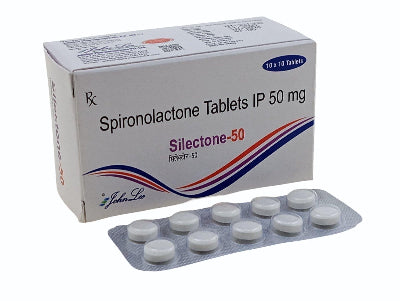

Silectone 50 mg (Spironolactone)
Silectone 50 mg contains spironolactone, a potassium-sparing diuretic and mineralocorticoid (aldosterone) receptor antagonist. It is used in heart failure, resistant hypertension, ascites due to liver disease, certain cases of hypokalemia, and hormone-related indications such as hirsutism. Use is by prescription and requires appropriate monitoring due to risks including hyperkalaemia and renal function changes.
Spironolactone acts by antagonising aldosterone at the distal renal tubule and collecting duct, promoting sodium and water excretion while conserving potassium. Dosing is indication-dependent; 50 mg is a commonly used maintenance or uptitration dose in several indications.
Product introduction
Silectone 50 mg provides a flexible mid-range tablet strength useful for titration. For heart-failure and many cardiovascular indications clinicians typically start lower (eg. 25 mg) and may increase to 50 mg once daily as tolerated; in other conditions (ascites, hypertension) dosing ranges can be broader and specialist-led. Baseline renal function and serum potassium should be checked before starting.
Uses of Silectone 50 mg (Spironolactone)
Common indications include:
- Heart failure with reduced ejection fraction (as an aldosterone antagonist to reduce mortality and hospitalisations) — added to guideline-directed therapy.
- Resistant hypertension (when blood pressure remains uncontrolled despite multi-drug therapy).
- Ascites due to cirrhosis (often higher total daily doses are used, titrated by response).
- Hypokalemia due to diuretics (potassium-sparing adjunct)
- Hormonal indications such as hirsutism or acne in women (off-label depending on region).
Note: Indication-specific dosing and monitoring differ—always follow your prescriber and local product labelling.
Benefits of Silectone 50 mg (Spironolactone)
- Reduces morbidity in HFrEF: aldosterone antagonists have proven mortality and hospitalisation benefits in selected heart-failure patients.
- Potassium-sparing effect: can prevent hypokalemia associated with loop or thiazide diuretics.
- Effective for resistant hypertension and ascites: valuable where other measures are insufficient.
- Useful endocrine effects: antiandrogenic actions can benefit women with hirsutism/acne (specialist-directed use).
Side effects of Silectone 50 mg (Spironolactone)
Important adverse effects are dose-related and include electrolyte disturbances and endocrine effects.
Common side effects
- Hyperkalaemia (high blood potassium) — the most clinically important risk. Monitor potassium closely. :contentReference[oaicite:9]{index=9}
- Increased urination, dehydration or dizziness
- Gastrointestinal upset (nausea, diarrhoea)
- Breast tenderness or gynecomastia (more common in men, dose-related)
- Menstrual irregularities and sexual dysfunction (women and men respectively) — related to anti-androgen effects
Serious risks: severe hyperkalaemia with cardiac arrhythmias, acute kidney injury in susceptible patients, and significant endocrine effects at higher doses. Concomitant use with ACE inhibitors, ARBs, potassium supplements, NSAIDs and some antibiotics increases hyperkalaemia risk. Seek urgent care for muscle weakness, palpitations, syncope or signs of severe dehydration.
How to use Silectone 50 mg (Spironolactone)
- Take exactly as prescribed. Typical heart-failure titration: start 25 mg once daily (if baseline K ≤5.0 mEq/L and eGFR acceptable) and increase to 50 mg once daily if tolerated; some patients may use 25 mg every other day if needed.
- For ascites and oedema dosing may be higher and split across the day — follow specialist instructions.
- Swallow tablets with water; food is optional but be consistent with regard to meals.
- Do not start potassium supplements or potassium-containing salt substitutes without clinician advice.
- Attend scheduled blood tests (serum potassium, renal function, and electrolytes) within 3–7 days of initiation or dose change and periodically thereafter.
How Silectone works
Spironolactone competitively antagonises aldosterone at mineralocorticoid receptors in the distal nephron, promoting sodium and water excretion while conserving potassium and hydrogen ions. It also has anti-androgenic effects through androgen receptor antagonism and inhibition of androgen biosynthesis.
Safety advice
| Pregnancy / Breastfeeding | Spironolactone is generally avoided in pregnancy due to anti-androgenic effects and potential fetal risk; discuss alternatives with your clinician. Use in breastfeeding should be reviewed with a prescriber. |
| Renal impairment | Use caution in reduced renal function — hyperkalaemia risk increases. Dose adjustments or avoidance may be necessary; monitor eGFR and serum potassium. |
| Concomitant medications | Avoid combining with other potassium-sparing agents or potassium supplements unless tightly monitored. NSAIDs, ACE inhibitors/ARBs, trimethoprim, and certain antivirals can raise potassium — review all medicines. |
| Endocrine effects | Expect possible gynecomastia, menstrual irregularities or sexual dysfunction at higher doses; discuss alternatives (e.g., eplerenone) if endocrine side effects are problematic. |
| Monitoring | Check serum potassium and renal function before starting, within the first week after initiation or dose increase, and periodically thereafter (frequency guided by baseline risk). Maintain hydration and report worrying symptoms promptly. |
What if you forget to take Silectone?
- If you miss a dose, take it as soon as you remember on the same day; if it is close to the next dose, skip the missed dose. Do not double doses to make up.
- If you miss multiple doses or have concerns about fluid balance or electrolytes, contact your clinician for advice.
All substitutes
Alternative mineralocorticoid receptor antagonists and strategies include:
- Eplerenone (more selective MRA with fewer anti-androgen effects)
- Adjustments to loop/thiazide diuretics and potassium monitoring
- Albumin/large-volume paracentesis and combination diuretic strategies for refractory ascites — managed by specialists
Choice of therapy must be individualised by the treating clinician.
Quick tips
- Have baseline potassium and renal tests before starting and re-check within 3–7 days of dose changes.
- Avoid potassium supplements and potassium-salt substitutes unless advised and monitored.
- If you develop muscle weakness, palpitations, or dizziness, seek urgent medical attention (possible hyperkalaemia).
- If endocrine side effects occur (breast tenderness, gynecomastia), discuss switching to eplerenone with your clinician.
Fact Box
| Generic name | Spironolactone |
| Brand | Silectone 50 mg |
| Drug class | Potassium-sparing diuretic / mineralocorticoid receptor antagonist |
| Form | Oral tablet (50 mg) |
| Typical dosing | Indication-dependent — e.g., heart failure often starts 25 mg once daily and may increase to 50 mg once daily if tolerated; ascites and hypertension dosing varies. Follow prescriber guidance. |
| Prescription | Required — prescriber & monitoring recommended |
Patient concerns
Will Silectone cure my condition? Spironolactone treats specific mechanisms (aldosterone excess, fluid retention) and improves outcomes in select conditions (eg. HFrEF) but is usually part of a multi-drug management strategy. Discuss goals and expectations with your clinician.
How quickly will I notice effects? Diuretic effect may be seen within days; clinical benefits (eg. symptom improvement in heart failure or ascites) and dose optimisation may take longer and require monitoring.
User feedback
Many patients report reduced fluid retention and symptomatic improvement; some experience endocrine side effects (breast changes, menstrual changes) particularly at higher doses — these are often reversible on dose reduction or switching agents. Monitoring for hyperkalaemia is emphasised by clinicians.
Are you currently taking Silectone 50 mg? Let us know how it is working for you by taking this survey.
FAQs
Can I take Silectone with an ACE inhibitor or ARB?
Yes, but this combination increases the risk of hyperkalaemia and requires closer monitoring of serum potassium and renal function. Your clinician will advise testing frequency and dose adjustments.
Is spironolactone safe in pregnancy?
Spironolactone is generally avoided in pregnancy due to potential anti-androgenic effects on the fetus; discuss alternatives with your clinician.
How should I store Silectone?
Store at room temperature away from moisture and heat. Keep out of reach of children and do not use after the expiry date.
Related products
- Eplerenone (selective mineralocorticoid receptor antagonist)
- Loop diuretics (furosemide) and thiazides (for combined diuretic strategies)
- Albumin / paracentesis services for refractory ascites (specialist care)
Want to share the information?
Share this article to help patients and clinicians understand spironolactone therapy and safe use.
Disclaimer:
This article is for educational purposes only and does not replace professional medical advice. Silectone (spironolactone) must be prescribed and monitored by qualified clinicians. Do not self-medicate. Follow your prescriber’s instructions and product labelling.
References
- StatPearls — Spironolactone: pharmacology, uses and monitoring.
- FDA Prescribing Information — Aldactone (spironolactone) dosing & safety.
- Drugs.com — Spironolactone: uses, dosing & precautions.
- NHS — How and when to take spironolactone (patient guidance).
Marketer details
genericurerx — support@genericurerx.com — www.genericurerx.com
In case of any issues, contact us
For ordering or prescription verification use live chat or our contact page. For medical concerns contact your treating clinician immediately.
Lab tests offered by us
- Serum potassium and creatinine baseline and follow-up
- Electrolytes and renal panel monitoring
- Endocrine review if gynecomastia or menstrual problems occur
Additional offers
Prescription coordination, cardiology & hepatology referrals and monitoring support available on request. Use code GLOBAL10 where eligible for first-order discounts.





Reviews
There are no reviews yet.