
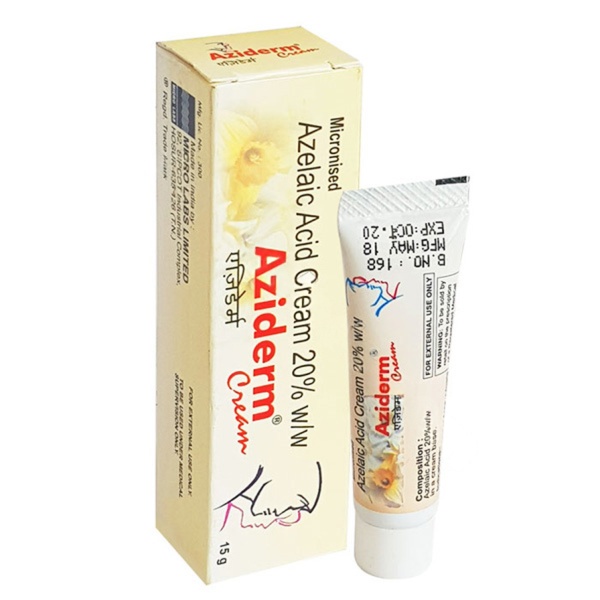
Aziderm Cream 10% (Azelaic Acid)

Price range: 48.00$ through 98.00$
Product Overview Aziderm Cream 10% (Azelaic Acid) represents a clinically validated, prescription‑strength topical agent specifically indicated for the management of mild to moderate facial acne vulgaris. Produced by Micro Labs Limited, each 15 gm tu
| Active Ingredients | Azelaic Acid |
|---|---|
| Delivery Time | 6 To 15 days |
| Indication | Acne |
| Manufacturer | Micro Labs Limited |
| Packaging | 15 gm in 1 tube |
| Strength | 15gm |
| Pack Size | Price | Quantity | |
|---|---|---|---|
| 3 Tube | 48.00$ | ||
| 6 Tube/s | 71.00$ | ||
| 9 Tube/s | 98.00$ |
Product Overview
Aziderm Cream 10% (Azelaic Acid) represents a clinically validated, prescription‑strength topical agent specifically indicated for the management of mild to moderate facial acne vulgaris. Produced by Micro Labs Limited, each 15 gm tube delivers a precise 10 % w/w concentration of azelaic acid, a naturally occurring dicarboxylic acid with demonstrated antimicrobial, anti‑inflammatory, and keratolytic activity. The formulation is supplied in a stable, non‑greasy semi‑solid base that facilitates even application across the facial contours while minimizing transepidermal water loss. Packaged in multiple configurations — 3‑tube, 6‑tube, or 9‑tube kits — Aziderm accommodates both short‑term and chronic treatment regimens. The product ships within 6 to 15 days from order confirmation, depending on the destination, and is intended for use under the guidance of a qualified dermatology professional. The cream maintains potency for up to 24 months when stored at 15‑30 °C, away from direct sunlight and moisture.
What is Aziderm Cream 10% (Azelaic Acid)?
Azelaic acid is a four‑carbon dicarboxylic acid synthesized by the oxidation of oleic acid and is recognized by the United States Food and Drug Administration (FDA) as a safe and effective topical therapy for acne. Aziderm Cream 10% contains ten percent azelaic acid dispersed in a hydrophilic‑lipophilic balance (HLB)‑optimized cream matrix that enhances skin penetration while maintaining a pH of approximately 5.5, which is compatible with the stratum corneum. The cream is formally indicated for the topical treatment of acne vulgaris in patients aged twelve years and older. Its composition excludes common irritants such as synthetic fragrances, dyes, and alcohols, rendering it suitable for sensitive skin when administered according to medical directions. For an authoritative scientific review, consult the National Institutes of Health (NIH) database entry on azelaic acid: NIH – Azelaic Acid.
Uses and Benefits
Aziderm Cream 10% is employed to attenuate the inflammatory component of acne, targeting papules, pustules, and mixed comedones. Clinical trials have shown that application twice daily results in a 45‑55 % decrease in lesion count after twelve weeks of continuous use. Beyond bacterial eradication, azelaic acid modulates keratinocyte differentiation, reducing hypercornification that obstructs follicular openings. The agent also interferes with melanogenesis by competitively inhibiting tyrosinase, which helps to fade post‑inflammatory hyperpigmentation — a particular advantage for individuals with darker phototypes. Because the formulation lacks peroxide or retinoid moieties, it can be safely co‑administered with other topical acne therapies, allowing personalized combination regimens without escalating irritation risk. Additional aesthetic benefits include a reduction in erythema and an overall smoother skin texture, contributing to improved patient satisfaction. The cream is also compatible with gentle cleansers and non‑comedogenic moisturizers, facilitating integration into daily skin‑care routines.
When used as part of a comprehensive acne management plan, Aziderm can contribute to long‑term remission and reduce the need for systemic antibiotics, thereby limiting antimicrobial resistance concerns.
How It Works
The therapeutic profile of Aziderm Cream 10% is multifactorial. Firstly, azelaic acid exerts bacteriostatic pressure on Propionibacterium acnes by inhibiting essential metabolic enzymes, thereby decreasing colony formation within the pilosebaceous unit. Secondly, it down‑regulates the activity of 5‑α‑reductase, limiting the conversion of sebaceous precursors into inflammatory lipid mediators. Thirdly, the acid acts as a competitive substrate for tyrosinase, diminishing melanocyte activity and consequently reducing hyperpigmented macules. Finally, its anti‑inflammatory action is mediated through the suppression of pro‑inflammatory cytokines — including interleukin‑1α and tumor necrosis factor‑α — resulting in decreased erythema and edema. This multimodal approach also helps to normalize follicular cornification, preventing the formation of new comedones, and supports the resolution of existing lesions.
Dosage Guidelines
Patients should apply a thin layer of Aziderm Cream 10% to the affected facial areas twice daily — once in the morning and once in the evening — after gentle cleansing and pat‑drying of the skin. The recommended dosage is approximately the size of a pea per treatment zone; excessive application does not increase efficacy and may predispose to irritation. For individuals new to the medication, a stepwise approach is advised: initiate treatment with once‑daily dosing for the first seven days to assess tolerability, then transition to the full twice‑daily schedule if no adverse skin reactions are observed. If a dose is missed, the patient should apply the medication as soon as remembered, provided that the next scheduled dose is not within 12 hours; otherwise, the missed dose should be skipped to avoid overlapping applications. Treatment should continue for a minimum of 8‑12 weeks before evaluating clinical response, and maintenance therapy may be continued under physician supervision to sustain clearance.
Side Effects
Adverse skin reactions are generally mild and transient. The most frequently reported side effects include localized erythema, pruritus, a transient burning sensation, and mild xerosis at the application site. Less common occurrences comprise contact dermatitis, localized hyperpigmentation, or follicular inflammation (folliculitis). Systemic absorption of azelaic acid is negligible; therefore, systemic side effects are rare. In the event of severe irritation, extensive swelling, or signs of an allergic response, discontinuation of the product and prompt consultation with a dermatologist are recommended. Rarely, patients may experience secondary bacterial infection or persistent dyspigmentation, which require medical evaluation. For an exhaustive safety profile, refer to the FDA’s drug labeling database: FDA Drug Labeling.
Warnings and Precautions
Aziderm Cream 10% is contraindicated in patients with a known hypersensitivity to azelaic acid or any excipient present in the formulation. Patients with active inflammatory skin disorders such as eczema, rosacea, or severe seborrheic dermatitis should use the product only under close medical supervision. Concomitant use of other topical acne agents containing high concentrations of benzoyl peroxide or salicylic acid may amplify irritation; staggered application times (e.g., morning versus evening) are recommended to mitigate this risk. Pregnant or lactating women should seek professional medical advice prior to initiation, as the safety data in these populations remain limited. The product must be kept out of reach of children, and accidental ingestion necessitates immediate medical attention. Always read the full product label before use. Additionally,Aziderm should not be applied to broken skin, mucous membranes, or near the eyes, and patients should avoid excessive sun exposure without protective sunscreen.
Frequently Asked Questions
Can Aziderm Cream 10% be used on body acne?
Aziderm is primarily formulated for facial application; however, a physician may prescribe it off‑label for limited body areas when clinical benefit justifies the off‑label use, especially in cases of persistent truncal acne that has not responded to other topical agents.
How long does it take to see visible improvement?
Most users observe a measurable reduction in inflammatory lesions after four to six weeks of consistent twice‑daily application, with maximal efficacy typically realized after twelve weeks of treatment; however, individual response can vary based on baseline severity and adherence.
Is it safe to combine Aziderm with oral antibiotics?
Yes, when prescribed by a qualified healthcare provider, Aziderm can be used in conjunction with oral antibiotics to enhance overall acne control while minimizing the need for higher systemic doses; this combination is often part of a stepped therapy approach.
Does the cream cause sun sensitivity?
Aziderm exhibits low photosensitizing potential; nevertheless, patients are advised to apply broad‑spectrum sunscreen and limit prolonged sun exposure to protect the treated skin from ultraviolet damage, especially during the initial weeks of therapy when skin may be more reactive.
Can I use Aziderm during pregnancy?
Current evidence does not establish the safety of Aziderm during pregnancy; therefore, consultation with an obstetrician or dermatologist is essential before using the product if you are pregnant or planning pregnancy.
Related Products
- Silybon 70 mg (Silymarin)
- Silymarin 70 mg (Generic)
- Mytret Micro Gel 0.04 (Tretinoin)
- Acnedap Gel (Dapsone)
- Adaferin Gel (Adapalene)
- Adapen Gel (Adapalene)
- Erytop Gel (Clindamycin)
- Glyco 6 Cream (Glycolic Acid)
- Ivrea Cream (Ivermectin)
- Melalong AD Cream (Mequinol/Tretinoin)
- Persol AC Gel (Benzoyl Peroxide)
- Retino A Cream (Tretinoin)
Related Products
In stock
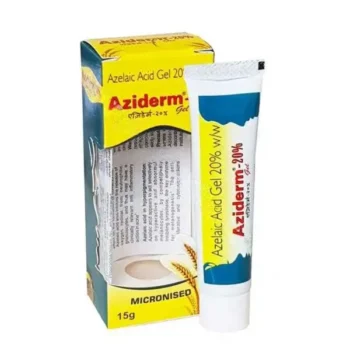
In stock
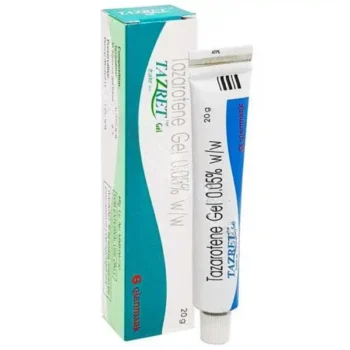
In stock
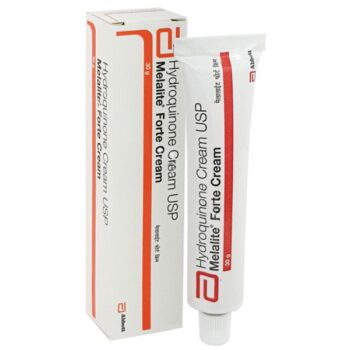
In stock
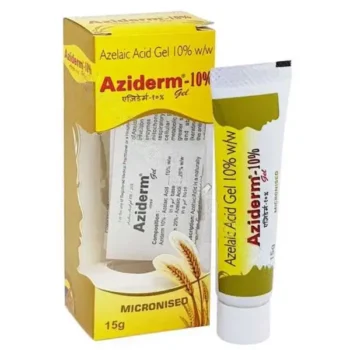
In stock
In stock
In stock
In stock
In stock
In stock
In stock
In stock
Reviews
There are no reviews yet.