Ozempic 0.5mg Pre-filled Pen (Semaglutide): Uses, Benefits, Dosage, Weight Loss, Side Effects & FAQs (2026)
Published by: GenaricCureRx
Last Updated: November 24, 2026
Category: Diabetes Medications | GLP-1 Medicines
Active Ingredient: Semaglutide
Manufacturer: Novo Nordisk
Ozempic 0.5mg Pre-filled Pen (Semaglutide) is a once-weekly prescription injectable medication used to improve blood sugar control in adults with type 2 diabetes. Ozempic has attracted considerable attention because of its effects on glucose regulation, appetite, and body weight.
People researching Ozempic 0.5mg often want to understand how the injection works, what the 0.5mg dose means, how many doses a pre-filled pen contains, and whether semaglutide may support weight loss.
However, Ozempic is not appropriate for everyone, and its approved medical uses must be distinguished from unapproved or off-label uses.
This comprehensive guide from GenaricCureRx explains the essential facts about Ozempic 0.5mg, including its mechanism of action, dosing schedule, potential benefits, side effects, storage requirements, and safety warnings.
Important: Ozempic is a prescription medication. The information provided here is educational and is not a substitute for individualized medical advice.
What Is Ozempic 0.5mg Pre-filled Pen?
Ozempic 0.5mg is a prescription medicine containing semaglutide, a glucagon-like peptide-1 (GLP-1) receptor agonist.
GLP-1 is a naturally occurring hormone involved in controlling blood glucose, insulin secretion, appetite, and digestive activity.
Semaglutide mimics important effects of this hormone.
Ozempic is administered through a subcutaneous injection, typically once every week.
The 0.5mg strength is commonly used as a maintenance dose for blood sugar control after the initial treatment period.
Ozempic is manufactured by Novo Nordisk and is available in several dose strengths.
The exact pen configuration, solution volume, and included accessories vary depending on the country and product presentation.
Ozempic 0.5mg Product Specifications
| Product Information | Details |
|---|---|
| Brand Name | Ozempic |
| Active Ingredient | Semaglutide |
| Strength | 0.5mg per injection |
| Manufacturer | Novo Nordisk |
| Drug Class | GLP-1 receptor agonist |
| Dosage Form | Solution for injection |
| Delivery Device | Pre-filled injection pen |
| Administration | Subcutaneous |
| Injection Frequency | Once weekly |
| Primary Indication | Type 2 diabetes |
| Prescription Required | Yes |
| Storage Before First Use | Refrigerated at 2°C–8°C |
| Pen Capacity | Depends on product presentation |
How Many Doses Are in an Ozempic 0.5mg Pen?
Many Ozempic 0.5mg multi-dose pens contain four weekly 0.5mg doses.
For example, a pen containing 2mg of semaglutide in total can provide four 0.5mg doses, when configured and labeled for that dosing schedule.
Other packaging configurations may support an initial combination of 0.25mg and 0.5mg injections.
Patients must check the exact label and manufacturer’s instructions supplied with their pen.
Do not assume that all Ozempic pre-filled pens have the same volume, number of doses, or dose selector.
What Is Ozempic 0.5mg Used For?
1. Type 2 Diabetes Management
Ozempic is primarily used to improve blood sugar control in adults with type 2 diabetes alongside diet and exercise.
Type 2 diabetes occurs when the body does not respond adequately to insulin or cannot produce enough insulin to maintain healthy blood glucose levels.
Semaglutide helps regulate glucose by increasing glucose-dependent insulin secretion and reducing inappropriate glucagon release.
2. Cardiovascular Risk Reduction
In the United States, Ozempic is also approved to reduce the risk of major adverse cardiovascular events in adults with type 2 diabetes and established cardiovascular disease.
These events include cardiovascular death, nonfatal heart attack, and nonfatal stroke.
Clinical evidence supports this benefit for appropriately selected patients.
3. Chronic Kidney Disease in Type 2 Diabetes
U.S. prescribing information also includes an indication for reducing the risk of sustained kidney function decline, end-stage kidney disease, and cardiovascular death in adults with type 2 diabetes and chronic kidney disease.
Importantly, the recommended maintenance dosage for this kidney-related indication is 1mg once weekly, following the appropriate dose-escalation schedule.
The 0.5mg strength should not be represented as the final recommended dose for this particular indication.
4. Weight-Related Effects
Semaglutide may reduce appetite and support weight reduction.
However, Ozempic is not FDA-approved specifically for chronic weight management in the United States.
Semaglutide is separately marketed under other brand names, including Wegovy, for certain approved weight-management indications.
Patients should not use Ozempic solely for weight loss without appropriate medical assessment and prescribing.
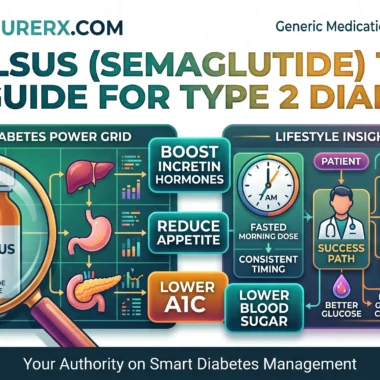
How Does Ozempic 0.5mg Work?
Ozempic contains semaglutide, which activates GLP-1 receptors.
Its effects involve several important biological mechanisms.
Stimulates Insulin Secretion
Semaglutide encourages insulin release when blood glucose is elevated.
This helps reduce blood sugar levels after meals.
Reduces Glucagon Secretion
Glucagon is a hormone that increases glucose release from the liver.
Semaglutide helps reduce inappropriate glucagon secretion.
Slows Gastric Emptying
Ozempic delays the movement of food from the stomach into the small intestine.
This can influence post-meal blood sugar levels and the absorption of certain oral medicines.
Influences Appetite
Semaglutide acts on pathways involved in hunger and fullness.
Some patients experience reduced appetite and food intake during treatment.
Potential Benefits of Ozempic 0.5mg
For appropriately selected patients, possible benefits include:
- Improved blood glucose control
- Reduced HbA1c levels
- Convenient once-weekly administration
- Glucose-dependent insulin activity
- Reduced appetite in some patients
- Weight reduction in some patients
- Potential cardiovascular benefits in indicated populations
- A reusable multi-dose delivery format for the duration of the pen’s intended use
Not every patient experiences the same benefits.
Treatment response depends on health status, other medications, diet, physical activity, and medical monitoring.
Ozempic 0.5mg Dosage Guide
Ozempic is generally introduced gradually to improve gastrointestinal tolerability.
The usual U.S. dosing schedule for adults with type 2 diabetes begins as follows:
| Treatment Period | Weekly Dose | Purpose |
|---|---|---|
| Weeks 1–4 | 0.25mg | Treatment initiation |
| Week 5 onward | 0.5mg | Maintenance treatment |
| After at least 4 weeks at 0.5mg, if needed | 1mg | Additional glucose control |
| After at least 4 weeks at 1mg, if needed | 2mg | Additional glucose control |
The 0.25mg dose is intended for treatment initiation and is not considered an effective maintenance dose for glucose control.
Ozempic 0.5mg is usually not the starting dose for new patients.
The dose should only be increased when appropriate and under medical supervision.
Patients must never increase their dose or use multiple injections to create a higher dose without instructions from their prescriber.
How to Use Ozempic 0.5mg Pre-filled Pen
Ozempic is administered by injection under the skin.
The approved injection areas include:
- Abdomen
- Thigh
- Upper arm
The injection site should be rotated between administrations.
General Administration Precautions
- Follow the manufacturer’s official Instructions for Use.
- Confirm that the medication label matches the prescription.
- Check that the solution has the appearance specified in the product instructions.
- Prepare the pen according to its exact design.
- Use a new compatible injection needle when required.
- Select only the prescribed dose.
- Inject into an approved subcutaneous site.
- Dispose of used needles safely.
- Store the pen according to its labeling.
Do not inject Ozempic into a vein or muscle.
Never share an Ozempic pen, even if the needle has been replaced.
Do not attempt to estimate a dose by counting pen clicks unless the manufacturer’s approved instructions specifically provide that method.
When Should Ozempic 0.5mg Be Taken?
Ozempic is generally administered once weekly.
It can be taken at any time of day, with or without meals.
Patients may choose a convenient day of the week and follow the prescribed schedule.
If the administration day needs to be changed, U.S. labeling permits this when at least 48 hours have passed since the previous injection.
Follow the instructions supplied with the specific product in your country.
What Happens if You Miss an Ozempic Dose?
According to U.S. prescribing information:
- If the missed dose is within five days of the scheduled injection, administer it as soon as possible.
- If more than five days have passed, skip the missed dose.
- Resume the regular weekly schedule after the missed dose.
Do not double the dose to compensate for a missed injection.
If several doses have been missed, contact your healthcare professional before restarting.
Ozempic 0.5mg and Weight Loss
One of the most frequently searched questions about Ozempic is whether the 0.5mg dose can help with weight loss.
Semaglutide has been associated with reductions in body weight in clinical studies involving people with type 2 diabetes.
Its effects on appetite, satiety, and food intake can contribute to weight changes.
How Much Weight Can Someone Lose With Ozempic 0.5mg?
There is no guaranteed amount.
Weight changes depend on factors such as:
- Starting body weight
- Dietary habits
- Physical activity
- Diabetes management
- Treatment duration
- Medication tolerance
- Other medical conditions
In the SUSTAIN 2 study reported in UK prescribing information, patients receiving semaglutide 0.5mg experienced an average weight reduction of approximately 4.3kg over 56 weeks, compared with approximately 1.9kg in the sitagliptin group.
These are clinical study averages, not predictions of what an individual patient will experience.
Ozempic should not be described as a guaranteed or rapid weight-loss solution.
Ozempic 0.5mg vs Ozempic 1mg vs Ozempic 2mg
Ozempic is available in several dose strengths.
| Feature | Ozempic 0.5mg | Ozempic 1mg | Ozempic 2mg |
|---|---|---|---|
| Active Ingredient | Semaglutide | Semaglutide | Semaglutide |
| Drug Class | GLP-1 agonist | GLP-1 agonist | GLP-1 agonist |
| Frequency | Weekly | Weekly | Weekly |
| Route | Subcutaneous | Subcutaneous | Subcutaneous |
| Dose per Injection | 0.5mg | 1mg | 2mg |
| Typical Role | Maintenance | Higher maintenance dose | Higher maintenance dose |
A higher dose may improve glycemic control in some patients but may also increase adverse effects.
The appropriate dose must be selected by a healthcare professional.
Ozempic vs Wegovy: What’s the Difference?
Ozempic and Wegovy both contain semaglutide.
However, they have different approved indications, formulations, and dosing schedules.
Ozempic is primarily used for type 2 diabetes and certain related risk-reduction indications.
Wegovy is approved for specific weight-management and other indications, depending on the jurisdiction and product labeling.
The two brands should not be treated as automatically interchangeable.
A healthcare professional must determine the appropriate medicine and dose.
Ozempic vs Mounjaro: Are They the Same?
No.
Ozempic contains semaglutide, while Mounjaro contains tirzepatide.
Ozempic primarily activates GLP-1 receptors.
Tirzepatide activates both GIP and GLP-1 receptors.
Both medicines may influence blood glucose and body weight, but they are different medications with distinct prescribing information.
They should not be combined or switched without medical supervision.
Common Side Effects of Ozempic 0.5mg
Common adverse reactions include:
- Nausea
- Vomiting
- Diarrhea
- Constipation
- Abdominal pain
Some patients may also experience indigestion, belching, or reduced appetite.
Gastrointestinal symptoms may be more noticeable when treatment begins or the dose is increased.
Contact a healthcare provider if adverse effects are persistent or difficult to tolerate.
Serious Side Effects and Warnings
Pancreatitis
Severe, persistent abdominal pain, sometimes radiating to the back, may be a warning sign of pancreatitis.
Seek immediate medical attention if concerning symptoms occur.
Severe Allergic Reactions
Serious allergic reactions, including anaphylaxis and angioedema, have been reported.
Symptoms can include breathing difficulty, severe swelling, or widespread allergic reactions.
Hypoglycemia
The risk of low blood sugar may increase when Ozempic is used with insulin or sulfonylurea medications.
Gallbladder Problems
Gallstones and gallbladder inflammation have been reported with GLP-1 therapies.
Kidney Problems
Severe vomiting or diarrhea can lead to dehydration and acute kidney injury.
Diabetic Retinopathy
Patients with a history of diabetic retinopathy may require monitoring, particularly when blood glucose improves rapidly.
Severe Gastrointestinal Effects
Semaglutide may cause significant gastrointestinal symptoms and is not recommended for some patients with severe gastroparesis.
Thyroid C-Cell Tumor Warning
U.S. prescribing information carries a boxed warning concerning thyroid C-cell tumors observed in rodents.
It is unknown whether Ozempic causes medullary thyroid carcinoma in humans.
Under U.S. labeling, Ozempic is contraindicated in patients with:
- A personal or family history of medullary thyroid carcinoma
- Multiple endocrine neoplasia syndrome type 2 (MEN2)
Patients should review the complete prescribing information with their healthcare provider.
Who Should Avoid or Use Ozempic With Special Precautions?
Ozempic may be unsuitable for certain individuals.
Important considerations include:
- Previous serious hypersensitivity to semaglutide
- Personal or family history of medullary thyroid carcinoma
- Multiple endocrine neoplasia syndrome type 2
- History of pancreatitis
- Severe gastrointestinal disease
- Diabetic retinopathy
- Significant dehydration
- Certain concurrent diabetes medications
- Pregnancy or plans for pregnancy
- Breastfeeding
- Planned procedures involving anesthesia or deep sedation
Do not stop or change existing treatment without consulting the prescribing clinician.
Ozempic and Pregnancy
Ozempic is not recommended for use during pregnancy.
Because semaglutide remains in the body for an extended period, U.S. prescribing information recommends discontinuing Ozempic at least two months before a planned pregnancy.
Patients who become pregnant during treatment should contact their healthcare provider.
Breastfeeding decisions also require individual medical assessment.
Ozempic 0.5mg Storage Instructions
Correct storage is important because Ozempic is a temperature-sensitive prescription medication.
Before First Use
- Store refrigerated between 2°C and 8°C (36°F–46°F).
- Do not freeze.
- Protect the pen from excessive heat and sunlight.
- Do not use medication that has been frozen.
After First Use
Storage instructions vary by country and product presentation.
For U.S. multi-dose Ozempic pens, labeling permits storage for up to 56 days after first use, either refrigerated at 2°C–8°C or at controlled room temperature between 15°C and 30°C.
For certain UK four-dose Ozempic pens, the labeled in-use shelf life is six weeks, with specific temperature requirements described in the local product leaflet.
Always follow the official instructions for the exact pen supplied.
Remove used needles after each injection and store the pen without a needle attached.
Do not use expired medication or medication with a compromised appearance.
Can Ozempic 0.5mg Be Used With Metformin?
Ozempic and metformin may be prescribed together for adults with type 2 diabetes.
They work through different mechanisms.
Metformin mainly reduces hepatic glucose production and improves insulin sensitivity.
Ozempic activates GLP-1 receptors and improves glucose-dependent insulin secretion.
Combination treatment may be appropriate for some patients but requires medical assessment.
Ozempic 0.5mg Medicine Information at GenaricCureRx
At GenaricCureRx, we provide educational information about diabetes medicines, active ingredients, available formulations, and prescription treatment considerations.
Patients researching Ozempic 0.5mg Pre-filled Pen should verify the exact product strength, manufacturer, prescription requirements, approved indications, and temperature-controlled handling.
Patients should obtain medication only through appropriately licensed and legally authorized supply channels.
For information about diabetes and generic medicines, visit:
Frequently Asked Questions About Ozempic 0.5mg
1. What is Ozempic 0.5mg Pre-filled Pen used for?
Ozempic 0.5mg contains semaglutide and is used to improve blood glucose control in adults with type 2 diabetes. Ozempic also has specific cardiovascular and kidney-related indications in the United States, with dosing determined by the relevant prescribing information.
2. Is Ozempic 0.5mg a weight-loss injection?
Ozempic can cause weight reduction in some patients, but it is not FDA-approved specifically for chronic weight management in the United States. Semaglutide is marketed separately as Wegovy for certain approved weight-management indications.
3. How many doses are in an Ozempic 0.5mg pen?
Many multi-dose Ozempic 0.5mg pens provide four weekly 0.5mg injections. However, package configuration varies, so patients must check the exact product label.
4. Is Ozempic 0.5mg taken daily or weekly?
Ozempic is administered once weekly, not daily.
5. Can I start treatment with Ozempic 0.5mg?
The usual initial dose for adults with type 2 diabetes is 0.25mg weekly for four weeks, followed by 0.5mg weekly. Follow your prescriber’s instructions.
6. How long does Ozempic 0.5mg take to work?
Ozempic begins acting after administration, but improvements in blood glucose and HbA1c develop over time. HbA1c results are generally evaluated over several months.
7. How much weight can I lose with Ozempic 0.5mg?
Weight reduction varies considerably. Clinical studies have reported average weight reductions in some patients, but no individual outcome is guaranteed.
8. Can Ozempic 0.5mg cause nausea?
Yes. Nausea is among the commonly reported gastrointestinal side effects.
9. Where should I inject Ozempic 0.5mg?
Ozempic is injected under the skin of the abdomen, thigh, or upper arm.
10. Can Ozempic 0.5mg be taken with food?
Yes. Ozempic can be administered with or without meals.
11. What happens if I miss an Ozempic injection?
Under U.S. labeling, a missed dose can be administered within five days. If more than five days have passed, skip the dose and resume the regular schedule.
12. Does Ozempic 0.5mg need refrigeration?
Yes, before first use. After opening, the permitted storage period and temperature range depend on the specific market’s product instructions.
13. Is Ozempic 0.5mg the same as semaglutide?
Semaglutide is the active ingredient in Ozempic. The brand name, formulation, dose, and regulatory approval are important distinctions.
14. Is Ozempic 0.5mg stronger than Ozempic 1mg?
No. Ozempic 1mg contains twice the semaglutide dose per injection as Ozempic 0.5mg.
15. Can Ozempic be taken with metformin?
Yes, the two medications may be prescribed together when medically appropriate.
16. Can Ozempic cause low blood sugar?
The risk increases when Ozempic is combined with certain other diabetes medications, particularly insulin or sulfonylureas.
17. Is Ozempic safe during pregnancy?
Ozempic is not recommended during pregnancy. U.S. prescribing information advises discontinuing it at least two months before a planned pregnancy.
18. Can Ozempic be used for type 1 diabetes?
Ozempic is not approved for treating type 1 diabetes and is not a substitute for insulin.
19. Is Ozempic 0.5mg a prescription medication?
Yes. Ozempic is a prescription medicine that requires medical assessment and appropriate treatment monitoring.
20. Can I use Ozempic 0.5mg without consulting a doctor?
No. Treatment requires a prescription and professional medical supervision because semaglutide has contraindications, possible drug interactions, and potentially serious adverse effects.
Final Thoughts
Ozempic 0.5mg Pre-filled Pen (Semaglutide) is a once-weekly prescription medication that plays an established role in type 2 diabetes management.
Its GLP-1 receptor activity contributes to improved glucose regulation and can influence appetite and body weight.
However, appropriate dose escalation, monitoring, storage, and attention to contraindications are essential.
The 0.5mg strength is commonly used after the initial 0.25mg treatment period, and the appropriate ongoing dose depends on the patient’s clinical needs.
GenaricCureRx encourages readers to use reliable medical information and consult qualified healthcare professionals before starting or changing prescription treatment.
Visit: https://genariccurerx.com/
Medical References
- Novo Nordisk — Ozempic 0.5mg Summary of Product Characteristics (UK)
https://www.medicines.org.uk/emc/product/9750/smpc - Novo Nordisk — Ozempic 0.5mg Patient Information Leaflet
https://www.medicines.org.uk/emc/product/9750/pil - U.S. National Library of Medicine — Ozempic Prescribing Information (2026)
https://dailymed.nlm.nih.gov/dailymed/drugInfo.cfm?setid=adec4fd2-6858-4c99-91d4-531f5f2a2d79 - Novo Nordisk — Official Ozempic Pen and Dosing Information
https://www.ozempic.com/ozempic-pen/dosing.html
Medical Disclaimer
This article is published by GenaricCureRx for general educational purposes only. It does not constitute medical advice, diagnosis, prescribing guidance, or a recommendation to use Ozempic. Semaglutide is a prescription medicine requiring evaluation and supervision by a licensed healthcare professional. Approved indications, packaging, storage instructions, and dosing requirements may vary by country. Do not start, stop, or change prescription medication without consulting your healthcare provider.