
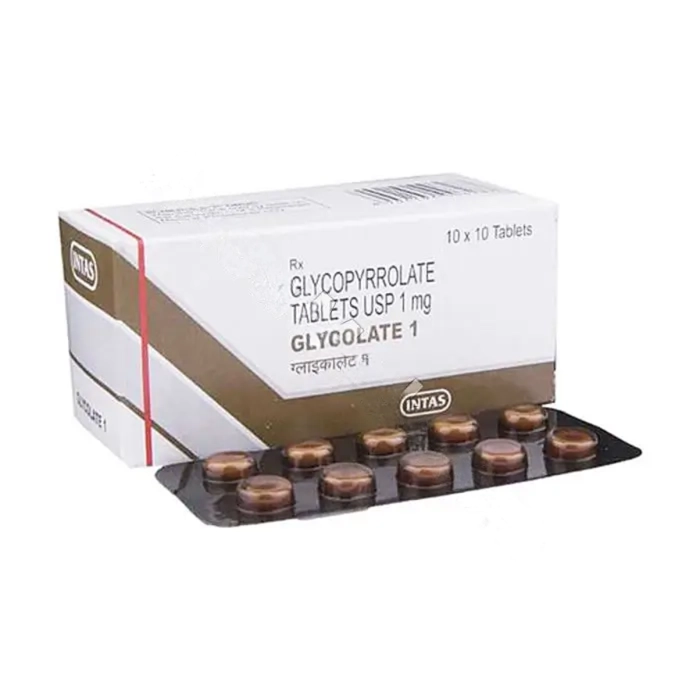
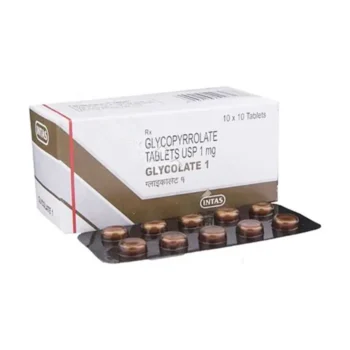
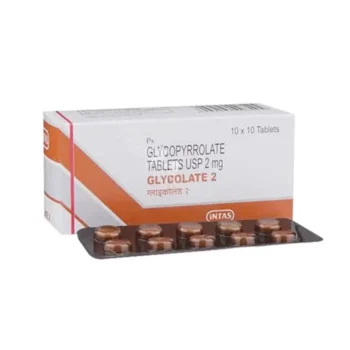
Glycolate 1 mg Tablet (Glycopyrrolate)
Price range: 45.00$ through 123.00$
Product Overview Glycopyrrolate 1 mg tablet, marketed under the brand name Glycolate, is a pharmaceutical preparation manufactured by Intas Pharmaceuticals Ltd. Each strip contains ten tablets, each delivering a precise 1 mg dose of the active ingred
| Active Ingredients | Glycopyrrolate |
|---|---|
| Delivery Time | 6 To 15 days |
| Indication | treat peptic ulcers |
| Manufacturer | Intas Pharmaceuticals Ltd |
| Packaging | 10 tablets in 1 strip |
| Strength | 1mg |
| Pack Size | Price | Quantity | |
|---|---|---|---|
| 50 Tablet/s | 45.00$ | ||
| 100 Tablet/s | 70.00$ | ||
| 200 Tablet/s | 97.00$ | ||
| 300 Tablet/s | 123.00$ |
Product Overview
Glycopyrrolate 1 mg tablet, marketed under the brand name Glycolate, is a pharmaceutical preparation manufactured by Intas Pharmaceuticals Ltd. Each strip contains ten tablets, each delivering a precise 1 mg dose of the active ingredient glycopyrrolate. The medication is formulated for oral administration and is supplied in pack sizes of 50, 100, 200, or 300 tablets to accommodate varying treatment durations. Designed for patients with chronic obstructive pulmonary disorder (COPD) and peptic ulcer disease, the tablet offers a convenient dosing schedule with a shelf‑stable composition that maintains potency throughout the recommended 6‑15 day delivery window. For more information on ulcer management, see the NIH resources.
What is Glycopyrrolate 1 mg Tablet (Glycopyrrolate)
Glycopyrrolate belongs to the anticholinergic class of drugs and functions as a competitive antagonist of muscarinic acetylcholine receptors. By blocking parasympathetic stimulation of the gastric parietal cells, it reduces gastric acid secretion, which can promote healing of duodenal and gastric ulcers. The 1 mg strength provides a balanced dose that minimizes systemic exposure while delivering therapeutic effect. Clinically, glycopyrrolate is used as an adjunct to standard ulcer therapy, particularly when patients require additional control of acid hypersecretion. Its pharmacokinetic profile features rapid absorption, moderate plasma protein binding, and elimination primarily via hepatic metabolism. For detailed pharmacology, refer to the FDA label.
Uses and Benefits
The primary indication for Glycopyrrolate 1 mg tablet is the treatment of peptic ulcers, including duodenal and gastric ulcer variants. In addition to acid suppression, the drug helps alleviate associated symptoms such as epigastric pain, nausea, and bloating, thereby improving patient comfort. When combined with proton pump inhibitors or H2‑receptor antagonists, glycopyrrolate can enhance overall ulcer healing rates and reduce recurrence. For COPD patients, the anticholinergic action also contributes to bronchodilation, offering dual therapeutic benefit in individuals with overlapping respiratory and gastrointestinal conditions. The oral tablet form ensures ease of adherence, especially for chronic therapy regimens. More on COPD guidelines can be found at the MedlinePlus website.
How It Works
Glycopyrrolate exerts its pharmacological effect by binding to M1 and M2 muscarinic receptors located on the gastric mucosa. This blockade prevents acetylcholine‑mediated stimulation of the H+/K+ ATPase pump, a key mediator of gastric acid production. Consequently, intracellular acid concentration declines, creating an environment conducive to mucosal repair. The drug’s selective receptor affinity limits interference with other physiological pathways, reducing the likelihood of off‑target effects. Pharmacodynamically, glycopyrrolate demonstrates a rapid onset within 30‑60 minutes after ingestion, with peak effect occurring around two hours post‑dose, supporting its use in scheduled dosing regimens for ulcer management. Detailed mechanism can be reviewed on Drugs.com.
Dosage Guidelines
The recommended adult dosage of Glycopyrrolate 1 mg tablet is one tablet taken orally twice daily, preferably before meals to maximize acid suppression. Treatment duration typically ranges from four to eight weeks, depending on ulcer severity and patient response. In patients with hepatic impairment, a reduced dose of 0.5 mg once daily may be considered after clinical assessment. For pediatric populations, safety and efficacy have not been established, and use is generally restricted to research settings. Patients should be instructed to swallow the tablet whole with water and to avoid crushing or chewing, as this could alter the drug’s release characteristics and increase the risk of local irritation. Dosage information is consistent with the Intas Pharmaceuticals product sheet.
Side Effects
Most individuals tolerate Glycopyrrolate 1 mg tablet well, but some may experience mild to moderate adverse reactions. Common side effects include dry mouth, mild constipation, blurred vision, and transient dizziness. Less frequently, patients can develop urinary retention, tachycardia, or allergic skin manifestations such as rash or pruritus. Serious adverse events are rare; however, signs of severe hypersensitivity, such as swelling of the face or throat, require immediate medical attention. It is important for patients to report any persistent or worsening symptoms to their healthcare provider, especially if they interfere with daily activities or indicate a need for dose adjustment. Additional safety data are available from the FDA adverse event reporting system.
Warnings and Precautions
Prior to initiating therapy with Glycopyrrolate, clinicians should assess patient history for cardiovascular disease, glaucoma, or obstructive urinary conditions, as anticholinergic effects may exacerbate these disorders. Concomitant use with other anticholinergic agents may increase the risk of side effects, necessitating dose modification or close monitoring. Pregnant or lactating women should consult a physician before use, as the safety of glycopyrrolate during these periods has not been fully established. Patients should be advised to store the medication at room temperature, away from moisture and heat, and to keep it out of reach of children. Discontinuation of therapy should be performed gradually under medical supervision to avoid rebound acid hypersecretion. Full prescribing information is accessible via the Intas website.
What is the recommended storage condition for Glycopyrrolate 1 mg tablets?
Store the tablets at room temperature, away from direct sunlight, moisture, and heat. Keep the strip sealed until use and ensure that the medication is out of reach of children and pets. Do not refrigerate or freeze the product, as temperature extremes can compromise tablet integrity.
Can Glycopyrrolate be taken with other medications for ulcer healing?
Yes, Glycopyrrolate is often prescribed alongside proton pump inhibitors or H2‑receptor antagonists to enhance ulcer resolution. However, it should not be combined with other anticholinergic drugs without medical supervision, as this may increase the risk of side effects such as dry mouth or constipation. Always review your complete medication list with a healthcare professional.
How long does it take to see improvement in ulcer symptoms after starting Glycopyrrolate?
Patients typically notice a reduction in abdominal discomfort within one to two weeks of consistent dosing. Full healing of the ulcer may require four to eight weeks, depending on the severity of the lesion and adherence to the prescribed regimen. If symptoms persist beyond eight weeks, a follow‑up evaluation is recommended.
Is Glycopyrrolate safe for use in patients with chronic obstructive pulmonary disorder (COPD)?
Glycopyrrolate has anticholinergic properties that can benefit COPD patients by improving bronchodilation. However, it should be used as part of a comprehensive COPD management plan and under physician guidance, especially if the patient is also taking other respiratory medications. Monitor for any worsening of urinary symptoms or dry mouth.
What should I do if I miss a dose of Glycopyrrolate?
If a dose is missed, take it as soon as you remember unless it is close to the time of the next scheduled dose. In that case, skip the missed dose and resume your regular dosing schedule. Do not double the dose to compensate for a missed tablet, as this can increase the likelihood of side effects.
Related Products
- Potassium Citrate 5 mg (Generic)
- Relgin 0.5 mg (Rasagiline)
- Axpero 5 Mg (Axitinib)
- Morr-F 3 (Minoxidil/Finasteride)
- Adapen Gel (Adapalene)
- Intacaine 2% Gel 30g (Lidocaine)
- Acamptas 333 mg (Acamprosate)
- Naltima 50 mg (Naltrexone)
- Itaspor 100 mg (Itraconazole)
- C-NAC Eye Drop (Sodium Carboxymethylcellulose/N-Acetyl-Carnosine)
- Lashisma Solution 3 ml (Bimatoprost)
- Cyclogyl Eye Drop (Cyclopentolate)
Related Products
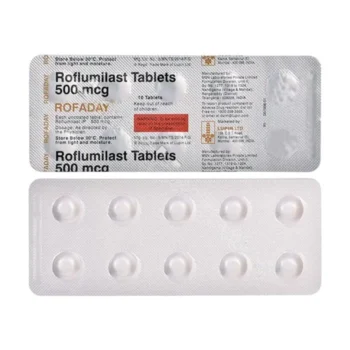
Product Overview Rofiday 500 mcg Tablet, manufactured by Lupin Limited, contains the active ingredient roflumilast, a selective phosphodiesterase‑4 (PDE4) inhibitor used for long‑term maintenance of chronic obstructive pulmonary disease (COPD) in adu
In stock
In stock
In stock
In stock
In stock
In stock
In stock
In stock
In stock
In stock
In stock
In stock

Reviews
There are no reviews yet.