
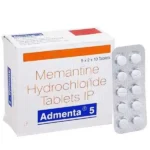

Memantine 5mg (Generic)
Price range: 30.19$ through 47.50$
Product Overview Memantine 5mg (Generic) is a prescription medication formulated to support cognitive function in adults diagnosed with moderate to severe Alzheimer’s disease. Manufactured by Sun Pharmaceutical Industries Ltd, the product is supplied
| Active Ingredients | Memantine |
|---|---|
| Delivery Time | 6 To 15 days |
| Indication | Alzheimer's disease |
| Manufacturer | Sun Pharmaceutical Industries Ltd |
| Packaging | 10 tablets in 1 strip |
| Strength | 5mg |
| Pack Size | Price | Quantity | |
|---|---|---|---|
| 30 Tablet/s | 30.19$ | ||
| 60 Tablet/s | 39.60$ | ||
| 90 Tablet/s | 47.50$ |
Product Overview
Memantine 5mg (Generic) is a prescription medication formulated to support cognitive function in adults diagnosed with moderate to severe Alzheimer’s disease. Manufactured by Sun Pharmaceutical Industries Ltd, the product is supplied in a convenient strip containing ten tablets, each delivering a precise 5 mg dose of the active ingredient memantine. The medication is packaged in multiple strengths—30, 60, or 90 tablets per order—to accommodate individualized treatment plans. Designed for oral administration, Memantine 5mg offers a standardized option that aligns with clinical guidelines for the management of neurodegenerative symptoms. This overview provides a comprehensive look at the therapeutic profile, practical considerations, and safety information relevant to patients, caregivers, and healthcare professionals seeking a reliable, medically‑approved solution. For more detailed scientific background, refer to Wikipedia
What is Memantine 5mg (Generic)
Memantine belongs to a class of drugs known as NMDA receptor antagonists. It functions by modulating the activity of glutamate, a neurotransmitter that, when overactive, can contribute to neuronal damage in Alzheimer’s disease. The 5 mg strength represents the initial therapeutic dose recommended for most adult patients before gradual titration to higher amounts. As a generic formulation, Memantine 5mg contains the same active ingredient as the brand‑name product but is offered at a cost‑effective price point, making it accessible to a broader patient population. The tablet is film‑coated to protect the drug from gastric degradation and to ensure consistent absorption within the gastrointestinal tract.
Uses and Benefits
The primary clinical use of Memantine 5mg is to slow the progression of cognitive decline associated with Alzheimer’s disease. By preserving synaptic function, the medication can help maintain memory, attention, and daily living skills for a longer period than would be expected without treatment. Patients often report modest improvements in mood stability and reduced behavioral disturbances, which can lessen the caregiving burden. From a health‑economic perspective, early intervention with memantine may delay the need for more intensive care settings, thereby reducing overall healthcare costs. Moreover, the drug’s once‑daily dosing regimen supports adherence, an important factor in achieving consistent therapeutic outcomes.
How It Works
Memantine exerts its therapeutic effect by blocking excessive activation of NMDA receptors, which are excitatory channels in the brain. In Alzheimer’s disease, abnormal overstimulation by glutamate leads to calcium influx and subsequent cellular stress, contributing to neuronal loss. By occupying these receptors without fully blocking baseline activity, memantine dampens the pathological signal while preserving normal neurotransmission. This nuanced modulation helps protect synapses and may improve intracellular signaling pathways that are essential for memory consolidation. Clinical studies have demonstrated that patients receiving memantine experience slower rates of cognitive deterioration compared to placebo when assessed over periods of 24 to 28 weeks.
Dosage Guidelines
Treatment with Memantine 5mg typically begins with a single tablet taken once daily, regardless of meals. After a minimum of one week, the dose may be increased to 10 mg per day, administered as two tablets of 5 mg each, and later titrated to a maximum recommended dose of 20 mg daily (four tablets). The titration schedule is designed to minimize the risk of adverse reactions such as dizziness or headache. Patients should be instructed to swallow the tablet whole and to avoid crushing or chewing. It is essential to adhere to the prescribed schedule and to consult a healthcare provider before making any changes to the dosing regimen, especially in individuals with renal impairment or concomitant medications. Additional pharmacologic details are available at PubMed
Side Effects
Most individuals tolerate Memantine 5mg well, but, like all medications, it can produce side effects. Commonly reported reactions include mild dizziness, headache, constipation, and occasional confusion, which are generally transient and resolve with continued use. Less frequent adverse events may involve hypertension, respiratory infections, or mood alterations such as anxiety. Serious complications are rare but can manifest as severe allergic reactions, seizures, or marked changes in electrolyte balance, particularly in patients with pre‑existing kidney disease. For a comprehensive list of reported events, refer to authoritative sources such as the FDA’s drug label or Drugs.com, and National Institutes of Health. If you experience any concerning symptoms, contact your physician promptly.
Warnings and Precautions
Prior to initiating therapy, clinicians should evaluate renal function because memantine is primarily excreted unchanged through the kidneys; dosage reduction is recommended when the estimated glomerular filtration rate falls below 30 mL/min/1.73 m². Patients with a history of seizures, cardiovascular disease, or recent myocardial infarction require careful observation, as the drug may exacerbate these conditions. Concomitant use of certain medications, such as specific antifungal agents or other NMDA antagonists, can alter memantine’s pharmacokinetics and should be avoided. Pregnant or breastfeeding individuals should only use memantine if the potential benefit justifies the possible risk, and a discussion with a qualified provider is essential. Storage instructions recommend keeping the tablets in their original packaging at room temperature, protected from moisture and out of reach of children. For additional safety information, see MedlinePlus. For detailed prescribing information, see the U.S. Food and Drug Administration label or consult a healthcare professional.
Frequently Asked Questions
- Can Memantine 5mg be used in patients without Alzheimer’s disease? Memantine is specifically indicated for moderate to severe Alzheimer’s disease and has not been approved for other cognitive disorders. Clinical trials have not demonstrated consistent benefit in non‑Alzheimer’s dementia or normal age‑related memory changes. Therefore, healthcare providers generally reserve the drug for patients with a confirmed diagnosis of Alzheimer’s and do not recommend its routine use in individuals without this condition.
- How long does it take to see benefits? The therapeutic effect of memantine typically becomes noticeable after several weeks of continuous daily dosing. Patients and caregivers may observe modest improvements in memory recall, attention span, or daily functioning after approximately four to six weeks, with maximal benefit often emerging after three months of treatment. Ongoing assessment by a clinician is essential to determine whether the drug is achieving the intended slowing of cognitive decline.
- Is the medication addictive? Because memantine acts on glutamate pathways rather than dopamine or opioid receptors, it is not classified as a controlled substance and carries a low potential for dependence or abuse. Clinical data and regulatory agencies have not identified addictive properties in patients using memantine as prescribed. Nevertheless, individuals with a personal history of substance use disorder should discuss their medical history with a physician before starting any new medication.
- Can I take Memantine with other vitamins or supplements? Memantine does not interact with most over‑the‑counter vitamins, minerals, or herbal supplements when taken at the recommended dose. However, patients should inform their healthcare provider about all concomitant products, especially those that affect kidney function or electrolyte balance. In rare cases, high‑dose supplements that influence NMDA activity could theoretically alter memantine’s effect, so a professional review is advisable before combining therapies.
- What should I do if I miss a dose? If a dose is missed, the patient should simply skip the missed tablet and resume the regular once‑daily schedule; doubling the dose is not recommended. Consistent daily intake helps maintain stable blood levels of memantine, which is important for achieving the intended therapeutic effect. If multiple doses are missed consecutively, it is advisable to contact a healthcare professional for guidance, especially if the patient experiences worsening symptoms or new side effects.
Related Products
- Vortidif 20 Mg (Vortioxetine)
- Vortidif 5 Mg (Vortioxetine)
- Pramipex 0.25 mg (Pramipexole)
- Mirtaz 30 Mg (Mirtazapine)
- Lurasidone 40 mg (Generic)
- Ropinirole 1 mg (Generic)
- Adesam 200 mg (Ademetionine/S-Adenosyl Methionine)
- Suminat 25 mg (Sumatriptan)
- Syncapone 100 mg (Levodopa/Carbidopa/Entacapone)
- Cyclomune Eye Drop (Cyclosporin)
- Glypride 4 mg (Glimepiride)
- Natrise 15 mg (Tolvaptan)
Related Products
In stock
In stock
In stock
In stock
In stock
In stock
In stock
In stock
In stock

In stock
In stock
In stock
Reviews
There are no reviews yet.