
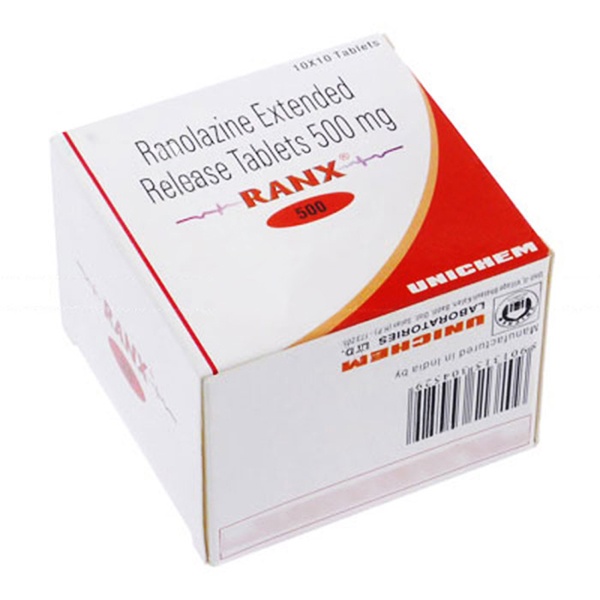
Ranx 500mg (Ranolazine)
Price range: 42.00$ through 80.00$
Product Overview
Ranx 500mg is a prescription tablet that contains the anti‑anginal agent ranolazine 500 mg per tablet. It is manufactured by Unichem Laboratories Ltd, a company with a long history of producing generic medicines that meet interna
| Active Ingredients | Ranolazine |
|---|---|
| Delivery Time | 6 To 15 days |
| Indication | used to prevent chest pain (angina) |
| Manufacturer | Unichem Laboratories Ltd |
| Packaging | 15 tablet er in 1 strip |
| Strength | 500mg |
| Pack Size | Price | Quantity | |
|---|---|---|---|
| 30 Tablet/s | 42.00$ | ||
| 60 Tablet/s | 62.00$ | ||
| 90 Tablet/s | 80.00$ |
Product Overview
Ranx 500mg is a prescription tablet that contains the anti‑anginal agent ranolazine 500 mg per tablet. It is manufactured by Unichem Laboratories Ltd, a company with a long history of producing generic medicines that meet international quality standards. Each strip contains 15 extended‑release tablets, and the product is offered in pack sizes of 30, 60, or 90 tablets to suit different treatment durations. The medication is intended for oral use and should be stored at room temperature, away from moisture and heat, to preserve its stability.
What is Ranx 500mg (Ranolazine)
Ranolazine belongs to a class of drugs known as late‑sodium‑current inhibitors. Its chemical name is 1‑(2,3‑dihydro‑1‑H‑indol‑2‑yl)‑3‑(2‑methoxy‑phenoxy)‑propan‑2‑ol, and it is formulated as a 500 mg extended‑release tablet. The drug was first approved by the U.S. Food and Drug Administration in 2006 for the management of chronic stable angina. It is marketed under various brand names, including Ranx, and is widely distributed in Asia, Africa, and Latin America through licensed distributors.
Uses and Benefits
The primary therapeutic use of Ranx 500mg is to reduce the frequency and severity of angina attacks in adults who have not achieved adequate control of chest pain with conventional anti‑anginal agents such as beta‑blockers, calcium‑channel blockers, or nitrates. In clinical practice, patients often report improved exercise tolerance, fewer episodes of chest pain, and a decreased reliance on rescue nitroglycerin. Real‑world studies have demonstrated that adding ranolazine to existing regimens can lower the total number of angina attacks by approximately 20‑30 % over a 12‑week period, contributing to better daily functioning and quality of life.
Beyond symptom relief, ranolazine may offer secondary cardiovascular benefits. By modestly improving diastolic function and reducing myocardial oxygen demand, it can be beneficial in patients with concomitant heart failure with preserved ejection fraction (HFpEF). Although the evidence is still emerging, some investigators have explored its off‑label use in this population, citing favorable hemodynamic profiles in early trials.
How It Works
Ranolazine exerts its anti‑anginal effect by selectively inhibiting the late sodium current (INa‑L) in cardiac myocytes. During the plateau phase of the action potential, sodium influx contributes to sustained calcium entry, which increases myocardial oxygen consumption. By blocking this late sodium entry, ranolazine diminishes intracellular sodium accumulation, thereby reducing calcium overload and improving diastolic relaxation. This mechanism lowers the heart’s oxygen requirement without altering heart rate or conduction velocity, making it uniquely suited for patients who cannot tolerate rate‑reducing therapies.
The pharmacological profile of ranolazine includes a half‑life of approximately 7‑9 hours, with steady‑state concentrations achieved after about five days of twice‑daily dosing. It is metabolized primarily by the cytochrome P450 enzymes CYP3A4 and CYP2C9, which explains the potential for drug‑drug interactions. The active metabolites contribute modestly to the overall therapeutic effect, but the parent compound remains the principal active moiety responsible for the anti‑anginal action.
For an in‑depth scientific review, readers may consult the National Center for Biotechnology Information (NCBI) and the U.S. FDA prescribing information, which provide detailed data on pharmacokinetics, efficacy, and safety.
Dosage Guidelines
Ranx 500mg is generally prescribed as one tablet taken twice daily, with an approximate 12‑hour interval between doses. The dosing schedule should be individualized by the prescribing clinician based on factors such as renal function, concomitant medications, and patient response. The tablet must be swallowed whole; crushing or chewing may alter the extended‑release characteristics and lead to dose dumping.
In patients with moderate renal impairment (creatinine clearance 30‑50 mL/min), a reduced dose of 250 mg twice daily may be considered, but such adjustments are rarely required because ranolazine is not heavily excreted unchanged in urine. Hepatic impairment can increase plasma exposure, so dose reduction is recommended for patients with severe liver disease (Child‑Pugh C).
Patients are advised to maintain a consistent dosing schedule and to avoid skipping doses, as abrupt discontinuation may precipitate a rebound increase in angina frequency. If a dose is missed, it should be taken as soon as remembered unless it is close to the time of the next scheduled dose, in which case the missed dose should be skipped and the regular schedule resumed.
Side Effects
Most adverse events associated with ranolazine are mild to moderate and typically occur early in therapy. The most frequently reported side effects include constipation, dizziness, headache, nausea, and asthenia (weakness). These symptoms often improve after the first few weeks as the body adjusts to the medication. Less common but clinically significant adverse events include QT‑prolongation, which may predispose to serious arrhythmias such as torsades de pointes, especially when combined with other QT‑prolonging drugs.
Hepatic enzyme elevations have been observed in a small percentage of patients, necessitating periodic monitoring of liver function tests in those with pre‑existing liver conditions. Rarely, hypersensitivity reactions such as rash, pruritus, or angioedema may occur, requiring immediate medical attention. Patients should be instructed to report any new or worsening chest pain, palpitations, or syncope to their healthcare provider promptly.
Warnings and Precautions
Prior to initiating therapy, clinicians should obtain a thorough medical history, focusing on cardiovascular status, electrolyte disturbances, and concomitant medications. Ranolazine is contraindicated in patients with known hypersensitivity to the drug or any of its excipients, as well as in those with severe hepatic impairment (Child‑Pugh C). Caution is advised when used in combination with other agents that prolong the QT interval, such as certain antiarrhythmics (e.g., sotalol, dofetilide), some antibiotics (e.g., macrolides), and certain antipsychotics.
Drug‑interaction studies have shown that strong CYP3A4 inhibitors (e.g., ketoconazole, itraconazole) can increase ranolazine plasma concentrations, potentially raising the risk of adverse effects. Conversely, CYP3A4 inducers (e.g., rifampin, carbamazepine) may decrease exposure, reducing efficacy. Patients should be reviewed for interactions with medications such as statins, anticoagulants, or antiplatelet agents, as additive effects on bleeding risk or hepatic metabolism may occur.
Pregnancy and lactation: The safety of ranolazine during pregnancy has not been established, and it should only be used if the potential benefit justifies the potential risk. Breastfeeding is not recommended while taking ranolazine, as trace amounts may be excreted in milk. Older adults may be more susceptible to dizziness and falls, so dose titration should be performed cautiously.
Storage instructions recommend keeping the tablets in their original packaging until use, protecting them from moisture and heat. The medication should be kept out of reach of children and pets. In case of overdose, symptomatic treatment is recommended, and medical attention should be sought immediately.
For comprehensive prescribing information, healthcare professionals can refer to the MedlinePlus Drug Information and the World Health Organization (WHO) Essential Medicines List.
Frequently Asked Questions
1. What is the primary indication for Ranx 500mg?
Ranx 500mg is indicated for the prevention of chronic stable angina pectoris in adult patients who have not achieved adequate control of chest pain with standard anti‑anginal therapy.
2. Can Ranx 500mg be taken together with nitroglycerin?
Yes, ranolazine can be co‑administered with nitrates such as nitroglycerin, but clinicians should monitor patients for symptomatic hypotension or dizziness, especially during the initiation phase of therapy.
3. How long does it take to notice the therapeutic benefits of Ranx 500mg?
Clinical studies suggest that a reduction in the frequency of angina episodes may become apparent after several weeks of consistent twice‑daily dosing, although individual response times can vary based on baseline disease severity and concomitant treatments.
4. Is Ranx 500mg safe for elderly patients?
Elderly patients can use ranolazine, but they often start at the lowest effective dose and are monitored closely for dizziness or falls. Renal function should be assessed, as age‑related decline may influence dosing decisions.
5. Where can I find detailed prescribing information for Ranx 500mg?
Comprehensive prescribing details are available on the Drugs.com monograph, the FDA Drugs@FDA database, and the National Institute for Health and Care Excellence (NICE) guidelines on angina management.
Related Products
- Ranx (Ranolazine)
- Ranx 1000mg (Ranolazine)
- Sefdin 300 mg (Cefdinir)
- Linox 600 mg (Linezolid)
- Corbis 2.5 mg (Bisoprolol)
- Corbis (Bisoprolol)
- Corbis 5 mg (Bisoprolol)
- Corbis 10 mg (Bisoprolol)
- Losar (Losartan Potassium)
- Losar 25 mg (Losartan Potassium)
- Losar 50 mg (Losartan Potassium)
- Ranoheal 500 mg (Ranolazine)
Related Products
In stock
In stock
In stock
In stock
In stock
In stock
In stock
In stock
In stock
In stock
In stock
In stock
Reviews
There are no reviews yet.