

Warf 1 mg (Warfarin)
Price range: 28.00$ through 32.00$
Warf 1 mg, manufactured by Cipla Limited, is an oral anticoagulant formulated to reduce the risk of blood clot formation in patients at risk for thromboembolic events. Each strip contains ten tablets of 1 mg warfarin, a well‑studied vitamin K antag
| Active Ingredients | Warfarin |
|---|---|
| Delivery Time | 6 To 15 days |
| Indication | Prevention of blood clots |
| Manufacturer | Cipla Limited |
| Packaging | 10 Tablets in a strip |
| Strength | 1mg |
| Pack Size | Price | Quantity | |
|---|---|---|---|
| 60 Tablet/s | 28.00$ | ||
| 90 Tablet/s | 30.00$ | ||
| 120 Tablet/s | 32.00$ |
Warf 1 mg, manufactured by Cipla Limited, is an oral anticoagulant formulated to reduce the risk of blood clot formation in patients at risk for thromboembolic events. Each strip contains ten tablets of 1 mg warfarin, a well‑studied vitamin K antagonist that has been used for decades in clinical practice. The product is packaged for convenient daily use and is intended for patients requiring long‑term prevention of clot propagation.
What is Warf 1 mg?
Warfarin is classified as an oral anticoagulant that works by inhibiting the synthesis of certain clotting factors in the liver. It belongs to the coumarin derivative family and requires regular monitoring of the international normalized ratio (INR) to maintain therapeutic levels. The 1 mg strength is often used for patients who need a lower dose or who are being titrated toward a stable INR range. For detailed pharmacologic information, refer to the NIH drug database.
Uses and Benefits
Warf 1 mg is primarily indicated for the prevention of blood clots in patients with atrial fibrillation, a history of deep‑vein thrombosis, or those at increased risk following orthopedic surgery. By lowering the blood’s ability to clot, it helps reduce the likelihood of stroke, pulmonary embolism, and systemic embolism. Clinical studies have demonstrated that consistent use, combined with appropriate laboratory monitoring, can significantly decrease the incidence of major cardiovascular events.
In addition to its primary indication, physicians may prescribe Warf for patients with mechanical heart valves or for the management of certain clotting disorders. The medication’s long‑standing track record, combined with its availability in a low‑dose formulation, makes it a practical option for long‑term therapy when dose adjustments are carefully managed.
How It Works
Warfarin interferes with the enzyme complex vitamin K epoxide reductase, which is essential for the activation of clotting factors II, VII, IX, and X. Without sufficient activation, these factors are produced in lower amounts, leading to a reduced ability of the blood to form clots. The therapeutic effect is not immediate; it typically takes several days to achieve a stable anticoagulant response, which is why baseline INR testing is recommended before initiating therapy.
Because warfarin’s effect is dose‑dependent and influenced by diet, genetics, and concomitant medications, patients are advised to maintain a consistent intake of vitamin K‑rich foods and to avoid sudden changes without medical supervision. Regular INR checks, often weekly at first, help ensure that the anticoagulant effect remains within the target range. For more detailed pharmacology, see the MedlinePlus resource.
Dosage Guidelines
Dosage of Warf 1 mg is individualized based on a patient’s medical history, target INR, and response to therapy. A health‑care professional typically initiates treatment with a low dose and adjusts it gradually, aiming for an INR that falls within the prescribed therapeutic window (often 2.0–3.0 for most indications). Patients should never adjust the dose on their own and must adhere to the schedule of laboratory monitoring outlined by their physician.
It is important to note that the 1 mg tablet strength is not a substitute for professional medical advice. If a dose is missed, the patient should contact their provider rather than double the next dose. For comprehensive dosing information, consult the FDA label or speak with a qualified clinician.
Side Effects
Like all medications, Warf 1 mg can cause side effects. The most commonly reported adverse events include minor bleeding (e.g., nosebleeds, gum bleeding), bruising, and mild skin rash. More serious complications, though less frequent, may involve gastrointestinal bleeding, intracranial hemorrhage, or a sudden drop in platelet count. Patients should seek immediate medical attention if they experience signs of excessive bleeding, such as black stools, severe headaches, or unexplained swelling.
Regular laboratory monitoring helps mitigate the risk of serious adverse outcomes by ensuring that the INR remains within the therapeutic range. If abnormal lab results are observed, a health‑care provider may adjust the dose or consider alternative anticoagulant therapy. For additional safety information, refer to the Drugs.com safety guide.
Warnings and Precautions
Warfarin is contraindicated in patients with a known hypersensitivity to the drug or any of its inactive ingredients. It should be used with caution in individuals with a history of liver disease, severe kidney impairment, or uncontrolled hypertension. Pregnant or breastfeeding women should discuss the risks and benefits with their physician, as warfarin can cross the placenta and may affect fetal development.
Drug interactions are a critical consideration; medications such as certain antibiotics, antifungals, and herbal supplements (e.g., St. John’s wort) can increase or decrease warfarin’s effect, potentially leading to over‑ or under‑anticoagulation. Patients should maintain an up‑to‑date medication list and inform all health‑care providers of any new prescriptions or over‑the‑counter products they are using. For a complete list of interactions, refer to the NIH drug interaction database.
Frequently Asked Questions
Q: Can Warf 1 mg be taken with food?
A: Warfarin is not significantly affected by most foods, but a consistent intake of vitamin K‑rich foods (such as leafy greens) is important. Sudden changes in diet can alter the drug’s effectiveness, so maintain a stable diet and discuss any major changes with your doctor.
Q: How often should my INR be checked?
A: Initially, INR testing may be required weekly until a stable range is achieved. Once stable, the frequency can be reduced to every 2–4 weeks, depending on your physician’s recommendation and any changes in health status.
Q: Is it safe to drink alcohol while on Warf 1 mg?
A: Moderate alcohol consumption may be permissible, but excessive drinking can increase the risk of bleeding. It is best to limit alcohol intake and discuss any alcohol use with your health‑care provider.
Q: What should I do if I miss a dose?
A: If you remember a missed dose within a few hours, take it as soon as possible. If it is near the time of your next scheduled dose, skip the missed dose and resume your regular schedule. Do not double up on doses.
Q: Can Warf 1 mg be used during pregnancy?
A: Warfarin is generally avoided during pregnancy due to the risk of fetal warfarin syndrome. Pregnant women are usually switched to alternative anticoagulants such as low‑molecular‑weight heparin. Consult your obstetrician for personalized guidance.
Related Products
- Ciplox 750mg (Ciprofloxacin)
- Diclofenac SR 100 mg
- Reactin 50 mg (Diclofenac)
- Cromal Forte Eye Drop (Sodium Cromoglycate)
- Alendronic Acid 35 mg (Generic)
- Rizact 5 mg (Rizatriptan)
- Flunarizine 5 mg (Generic)
- Eliquis 2.5 mg (Apixaban)
- Warf 2 mg (Warfarin)
- Warf 3 mg (Warfarin)
- Mucinac 200 mg (Acetylcysteine)
- Temozolomide 20 mg (Generic)
Related Products
In stock
In stock
In stock
In stock
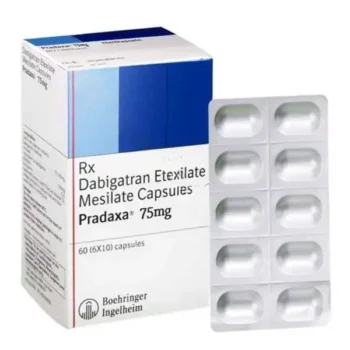
Product Overview
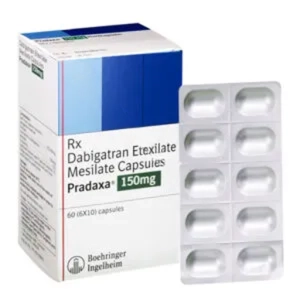
Dabigatran Etexilate 75mg is a generic anticoagulant formulated to reduce the risk of blood clots in adults. Each strip contains ten capsules, and the product is offered in pack sizes of 30, 60, or 90 capsules. Manufactured by Boeh
In stock
In stock
In stock
In stock
In stock
In stock
Reviews
There are no reviews yet.